fetching data ... 
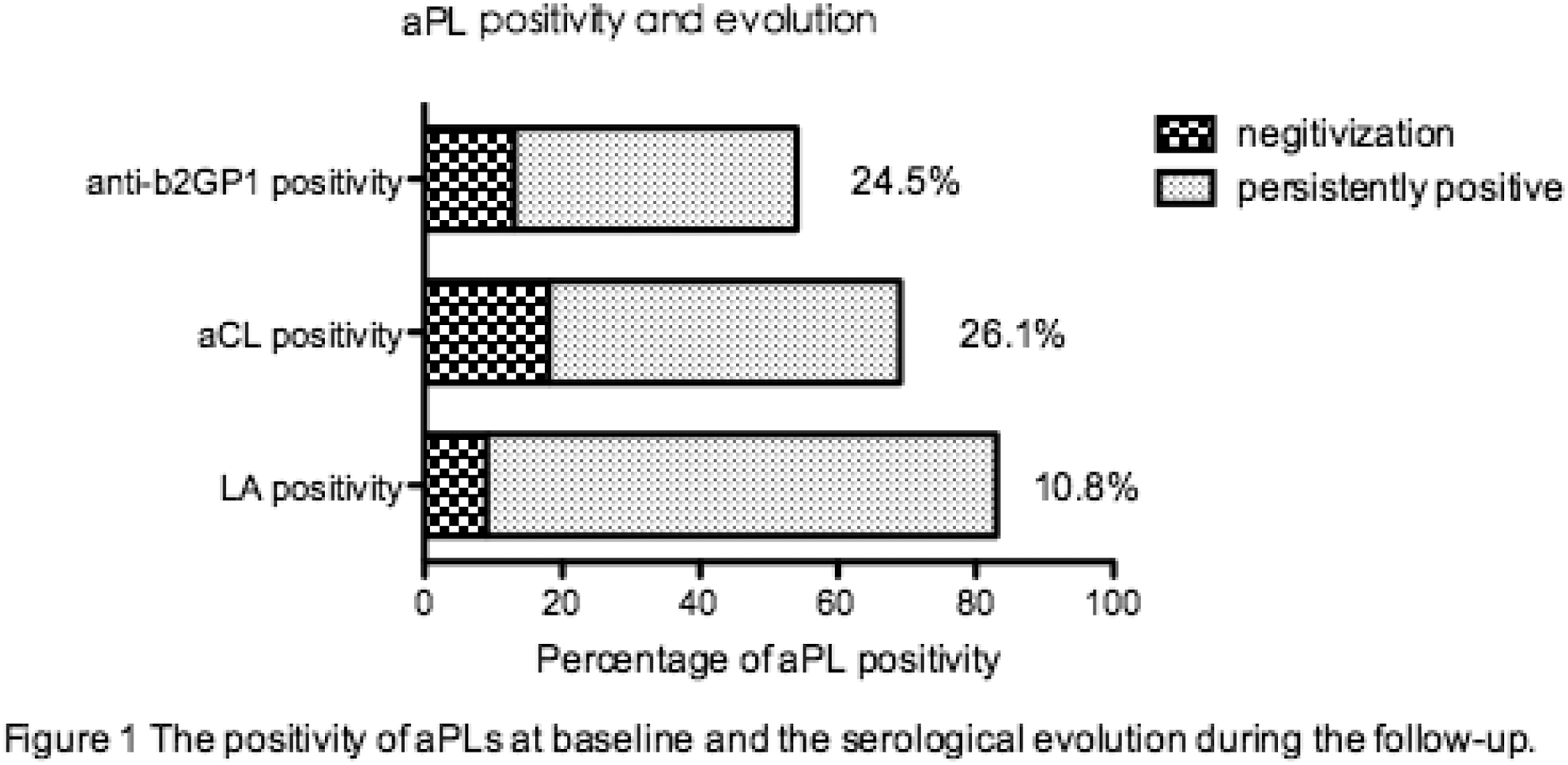
Background: Antiphospholipid antibodies (aPLs) and thromobotic/obestetric events are the characteristics the antiphospholipid syndrome. The titers of aPL sometimes may decrease and become negative during the follow-up period. Whether the negativization being related with a lower risk of thrombotic events, allowing for withdrawal of anti-coagulant therapy is controversial. And the factors associated with each aPL negativization are still unknown.
Objectives: To explore the clinical and serological course of patients with positive aPLs, and the factors and therapeutic implications associated with aPL negativization.
Methods: Patients with a persistent positive aPL serology according to established criteria between 1997 and 2018 were included. The test of Lupus anticoagulant (LA), anti-cardiolipid antibody (aCL) and anti-β2 glycoprotein I (anti-β2GP1) were following the International Society on Thrombosis and Haemostasis guidelines.The patients were classified as aPL negativization if the following aPL tests became negative, on two or more occasions at least 12 weeks apart. Titer more than 40RU/ml was defined as moderate to high titer for aCL and anti-β2GP1. For patients receiving warfarin, the results of LA were counted only when INR<1.5.
Results: The baseline characteristics of 93 patients were shown in
The baseline characteristics of aPL positive patients
| baseline characteristics | n=93 |
|---|---|
| Female, n(%) | 82.0 (88.2) |
| Age, mean±SD | 33.7±13.8 |
| Disease duriation, median(IQR) | 68.0 (85.0) |
| Follow-up period, median(IQR) | 45.0 (45.0) |
| Thrombotic events, n(%) | 29.0 (31.2) |
| Obstetric events, n(%) (n=82) | 25.0 (26.9) |
| Non-criteria manifestiations, n(%) | 45.0 (48.4) |
| SLE, n(%) | 62.0 (66.7) |
| Number of aPL positivity, median(IQR) | 2.00 (1.00) |
| aPL triple positivity, n(%) | 40.0 (43.0) |
Conclusion: The proportion of aCL and anti-β2GP1 negativization are higher than LA. The number of positive antibodies and higher antibody load are associated with persistently positive serology. Patients with SLE were easier to get aCL negativization.
Disclosure of Interests: None declared