fetching data ... 
Background: Rheumatoid arthritis (RA) is associated with greater risk of diabetes, the coexistence of RA and diabetes significantly increased risk of cardiovascular morbidity and mortality. For this reason, it is important to document the role of individual medications associated with RA in the diabetes development.
Objectives: We aim to evaluate the impact of antirheumatic drugs therapy on risk of developing diabetes in RA patients.
Methods: Electronic database searches of PubMed, EMBASE and Cochrane Library plus a hand search of conference proceedings were performed without language restrictions from inception to 14 October 2019. All study designs assessing the association between diabetes and antirheumatic agents in RA relative to a comparator group were included. The primary outcome was the association between treatments and diabetes. The secondary outcomes were their associations, stratified by dosage, exposure duration. Data were pooled using fixed-effects or random-effects meta-analysis according to I 2 and pooled hazard ratios (HRs) and 95% confidence intervals (CIs) was used as a summary statistic.
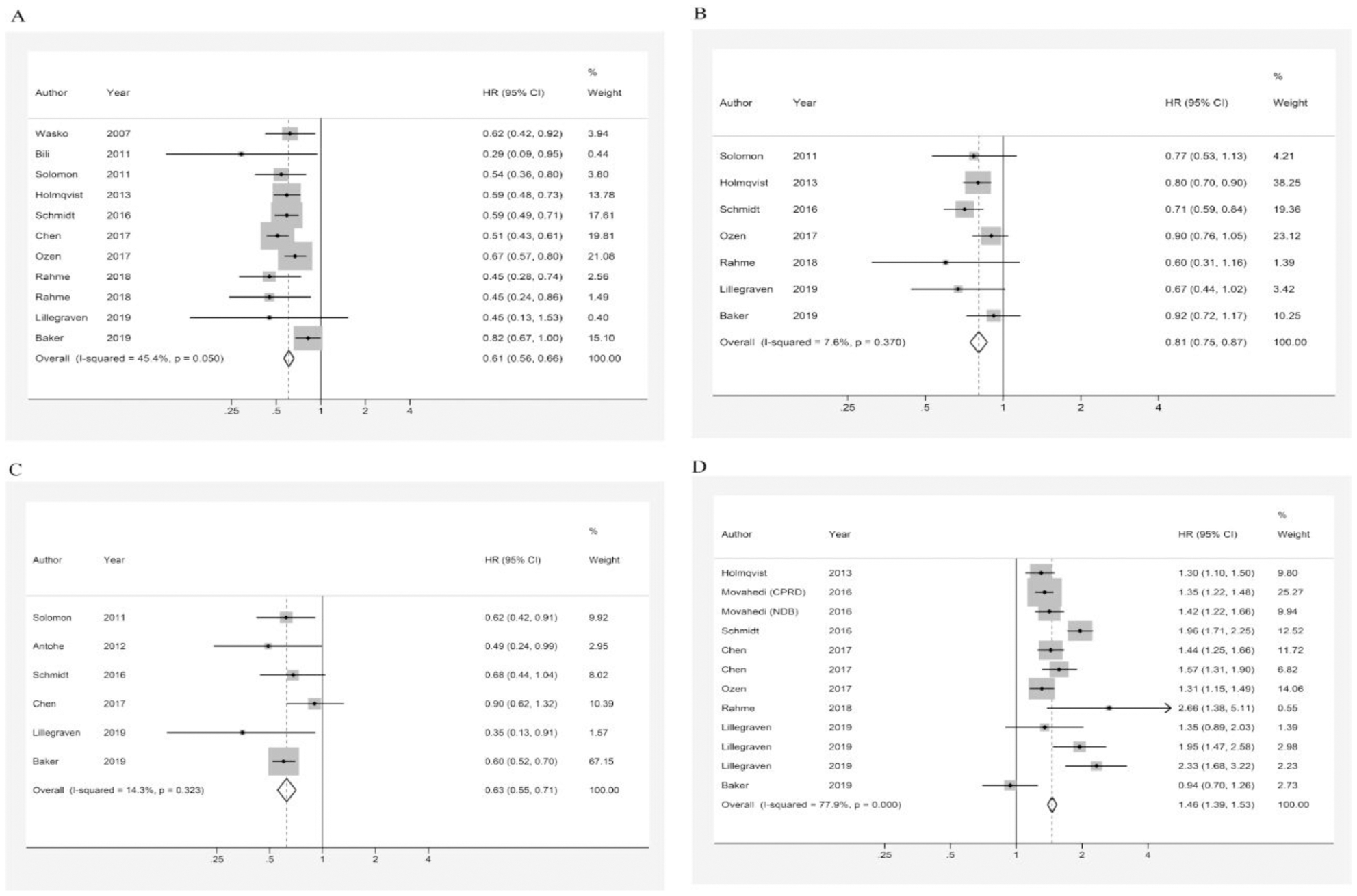
Results: Of 3961 identified articles, a total of 15 studies involving 552,019 patients with RA (11 for hydroxychloroquine, 7 for methotrexate, 6 for tumor necrosis factor inhibitors [TNFi], 8 for corticosteroids) were included. In pooled analysis, a reduced risk of diabetes was reported with hydroxychloroquine (meta-HR 0.61, 95%CI 0.56-0.66), methotrexate (meta-HR 0.81, 95%CI 0.75-0.87), TNFi (meta-HR 0.63, 95%CI 0.55-0.71), while corticosteroids increased the risk of developing diabetes in a dose-dependent manner (Any dose: meta-HR 1.46, 95% CI 1.39-1.53; <10 mg/day: meta-HR 1.30, 95% CI 1.13-1.51; ≥10 mg/day: meta-HR 2.25, 95% CI 1.88-2.70). Additionally, concomitant corticosteroids treatment with hydroxychloroquine appear to eliminate the excess diabetes risk from corticosteroids (meta-HR 0.64, 95% CI 0.51-0.79).
Conclusion: Our meta-analysis provides important evidence for the impact of antirheumatic drugs on diabetes in RA and may aid clinical decision-making by suggesting that hydroxychloroquine, methotrexate and TNFi decrease diabetes risk while corticosteroids increase such risk in RA. Large, prospective, well-designed studies are needed to explore the effects of such drugs on diabetes development in the RA patients with high-risk diabetes.
REFERENCES:
[1]Pradhan AD, Manson JE, Rifai N, et al. C-reactive protein, interleukin 6, and risk of developing type 2 diabetes mellitus. JAMA. 2001;286:327-34.
[2]Ozen G, Pedro S, Holmqvist ME, et al. Risk of diabetes mellitus associated with disease-modifying antirheumatic drugs and statins in rheumatoid arthritis. Ann Rheum Dis. 2017;76:848-854.
Meta-analysis of diabetes in patients with rheumatoid arthritis treated with (A) hydroxychloroquine; (B) methotrexate; (C) tumor necrosis factor inhibitors; or (D) corticosteroids. HR, hazard risk.
Disclosure of Interests: None declared