fetching data ... 
Background The Inflammatory Arthritis (IA) patient population is growing, whilst there already is a shortage of health care professionals (HCPs). It is impossible to meet the future demand for care with the current healthcare system. Digital biomarkers are objective, quantifiable, physiological and behavioural data that are collected and measured by means of digital devices [1]. They can support continuous measurements outside the physical confines of the clinical environment and so could help close the gap in healthcare demands.
Objectives To obtain the patients’ insights on disease activity, disease management and care needs; and to empathise with their attitude towards digital biomarkers in order to obtain future directions for digital biomarker development.
Methods A Design Thinking approach is followed for the development of digital biomarkers in rheumatology. It is a human-centered problem-solving approach that leverages empathy and collective idea generation to tackle complex challenges [2]. Semi-structured focus group discussions, based on the Common Sense Model of Self-Regulation [3], were conducted through 60-minute video conferences. All interviews were audio-recorded, transcribed to verbatim and coded. Results were discussed with our patient partners.
Results In total 6 focus groups were organised, with a total of 30 IA patients (22 PsA; 8 RA, age 51± 11 years, 48% male, time since diagnosis 7 (3:12,5) years). The main findings were: Trial and error; life after diagnosis is marked by trial and error. They need(ed) to learn how and when to listen to their bodies, uncover potential triggers of inflammation and develop appropriate disease management. They felt an urgency to get advice on lifestyle adjustments, career choices and life adaptations, and discuss these with their HCPs and fellow patients. Role of the HCPs in care needs; patients visited their HCP for affirmation, reflection and future directions. They often doubted whether their symptoms were rheumatic. Secondly, they wanted to be ensured adverse drug reactions are absent, blood tests brought them peace of mind. Furthermore, consultations were indicated as an obligatory moment of self-reflection. Conversing with their HCP was seen as a reality check and a conversation about (new) options. Digital Biomarkers; attitudes towards digital biomarkers varied. Some patients thought it could provide them with deeper insights and reminders before crossing a line. Some patients thought it relevant only for their HCP. They did not want a constant reminder of their disease. Others did not see any additional value as they knew themselves well enough that no device should tell them whether their feelings are true or not.
Conclusion The following problem statement from the patients’ perspective can be formulated; “we suffer from a disease that has turned our lives upside down, we have to cope with it every day. Our learning mechanism is by trial and error. We have to know which activities should be avoided and how to predict the seriousness of a flare. It is difficult to discriminate pain as just pain, from pain as a preceding symptom of flare. The affirmation from our HCPs and our blood results bring us peace of mind. Perhaps, by applying technology, we can speed up our learning process and triggers of flare could be identified. However, one should be mindful of the purpose, the amount of reminders it gives us and the visualisation of our measurements.” In general there is no strong resistance to digital biomarkers. However, for future uptake the recorded data should be of clear benefit for the patient.
Image/graph:
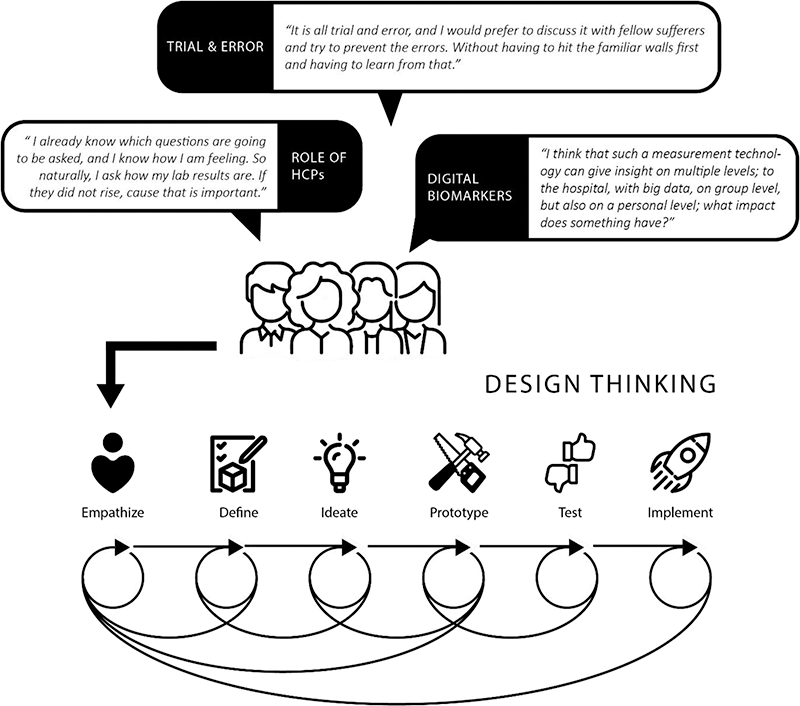
Figure 1. Quotes form patient focus groups and the design thinking process.
References
Acknowledgements This study was funded by Pfizer through a researcher-initiated grant.
Disclosure of Interests Patty de Groot Grant/research support from: This study was funded by Pfizer through a researcher-initiated grant., Ilja Tchetverikov Grant/research support from: This study was funded by Pfizer through a researcher-initiated grant., Yvonne Goekoop-Ruiterman Grant/research support from: This study was funded by Pfizer through a researcher-initiated grant., Marc R Kok Grant/research support from: This study was funded by Pfizer through a researcher-initiated grant., Marijn Vis Grant/research support from: This study was funded by Pfizer through a researcher-initiated grant., Wendy Olsder Grant/research support from: This study was funded by Pfizer through a researcher-initiated grant., Jasper Foolen Grant/research support from: This study was funded by Pfizer through a researcher-initiated grant., Rien Bakker Grant/research support from: This study was funded by Pfizer through a researcher-initiated grant., Jolanda Luime Grant/research support from: This study was funded by Pfizer through a researcher-initiated grant.
Keywords: Biomarkers, Self-management, Telemedicine
DOI: 10.1136/annrheumdis-2023-eular.354