fetching data ... 
Background: Primary Sjögren’s syndrome (PSS) has many effects such as fatigue, pain, and sleep disturbance, which limit patients’ daily and social lives. Patients with PSS may experience limitations in physical performance and decrease in physical activity levels.
Objectives: The aim of our study was to determine demographic characteristics and anthropometric measurements, to asses fatigue, depression, physical activity status and quality of life in patients with PSS, and to determine the relationship between these data and disease-related parameters.
Methods: This study was conducted between August 2020 and August 2023 at Ege University, Turkey with 117 female volunteers with primary Sjögren’s syndrome patients over the age of 19. Information on the patients was obtained from the patient registration system, anthropometric measurements were taken, the disease activity index (ESSDAI) was calculated, blood biochemical tests were analyzed, the Short Form 36 (SF36) was used to asses quality of life, the Pittsburgh Sleep Quality Index (PSQI) was used to assess sleep quality, and the Physical Activity Questionnaire Short Form (IPAQ) was used to assess physical activity levels.
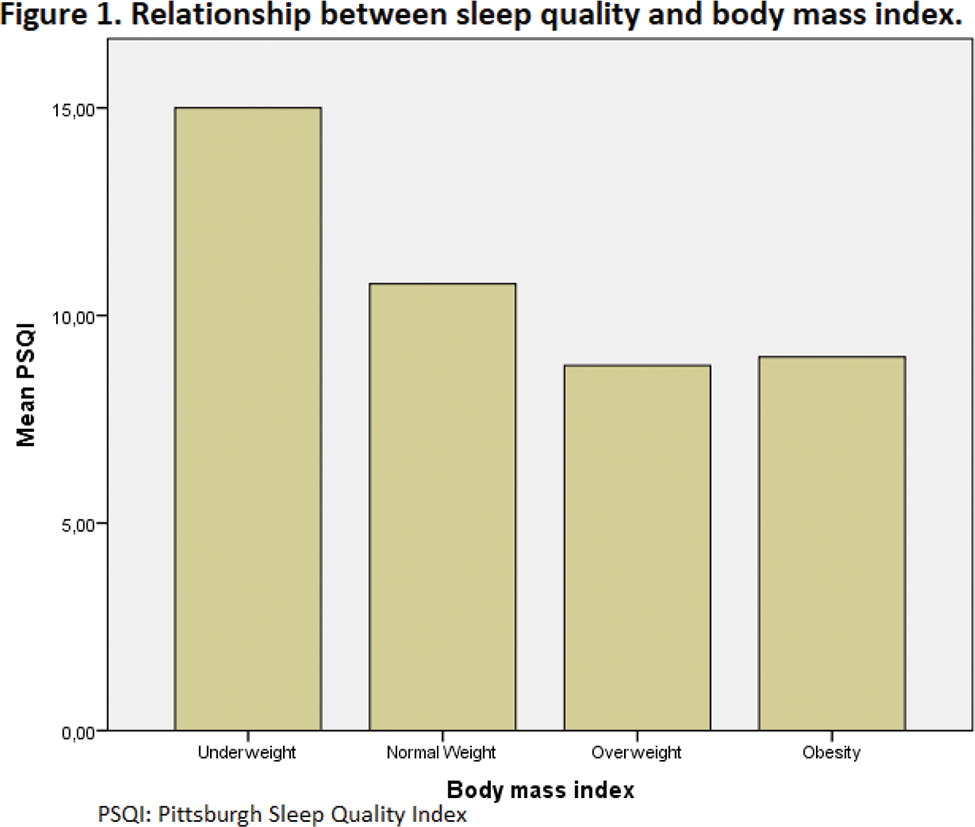
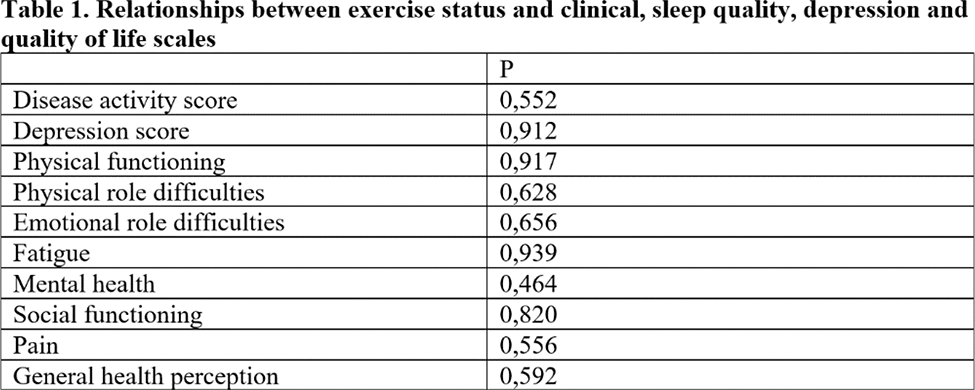
Results: The mean age of the 117 PSS patients was 55.2±11.7 years and the mean disease score (ESSDAI) was calculated as 4.4±5.0. Although not significant, there was an association between BMI and sleep quality (p=0.186). Regression analysis showed a significant relationship between lean mass and PSQI sleep scores (r:-0.201, p:0.043). The sleep quality of overweight people seems to be relatively better (Figure 1). Specifically, patients with more lean mass than fat mass slept better. While 55.6% of the patients were inactive, 44.5% performed minimal or vigorous exercise. Exercise did not improve sleep quality (p=0.35). On the contrary, the rate of poor sleep was higher among who exercised (p=0.192). The rate of patients with poor sleep quality was 75.5% in all patients, and the rate of sleep disturbance was 83% in those who did any exercise. In addition, physical function was found to be lower in patients with higher physical activity compared with the minimal and low physical activity groups, although not significantly (p=0.061). The ESSDAI scores of the very active patients were higher than those of the minimally active or inactive patients, although not significantly (p=0.153), whereas the fatigue scores of the vigorous exercisers were better (0.360). Depressed patients had significantly worse physical functioning (p=0.016). However, although not significant, the mean depression scores of those who exercised were lower (p=0.156). In addition, the mental health of those who were vigorously active was better (p=0.169) (Table 1).
Conclusion: The effect of weight on sleep and the effect of exercise on disease scores and fatigue in people with PSS have not been adequately analyzed previously. Perhaps the reason why the relationships between exercise levels and disease activity and fatigue are not significant is because people do not know how to exercise properly. We think it is very important that patients do enough of the right kind of exercise and that they are educated about it. If necessary, it will be more beneficial for PSS patients to exercise with an instructor. More research is needed to determine the most appropriate ratio of exercise intensity for patients. It is also important that weight gain is done in a professional way. We believe that a better understanding of the multisystem involvement of the disease and the relationship between different findings and the effect of exercise on the disease will have a positive impact on patient management and treatment decisions.
REFERENCES: NIL.
Acknowledgements: NIL.
Disclosure of Interests: None declared.