fetching data ... 
Background: Axial spondylarthritis (AxSpA) is a chronic inflammatory condition affecting the spine and sacroiliac joints. Additionally, it may present with extra-musculoskeletal manifestations which include inflammatory bowel disease, psoriasis, and anterior uveitis and peripheral manifestations consisting of dactylitis, enthesitis and peripheral arthritis. The examination of sex differences in axSpA has been the focus of several studies, revealing distinct disease manifestations among male and female patients. Previous research suggests a higher incidence of peripheral and extra-musculoskeletal manifestations in females with axSpA, including enthesitis, psoriasis, and inflammatory bowel disease, while acute anterior uveitis is more commonly observed in male patients.
Objectives: To investigate sex-associated differences in the prevalence of extra-musculoskeletal and peripheral manifestations among individuals with axSpA.
Methods: This is a retrospective cohort study with data obtained from the Ankylosing Spondylitis Registry of Ireland (ASRI), which is a large cross-sectional, multicentre cohort study. This analysis aimed to compare male and female subgroups within the ASRI cohort. Statistical comparisons between male and female subgroups were assessed using p-values calculated through Mann Whitney U or chi-square tests. Multiple regression analysis is also employed, incorporating gender, HLA-B27 status, and axSpA disease duration as covariates in a binary outcome model.
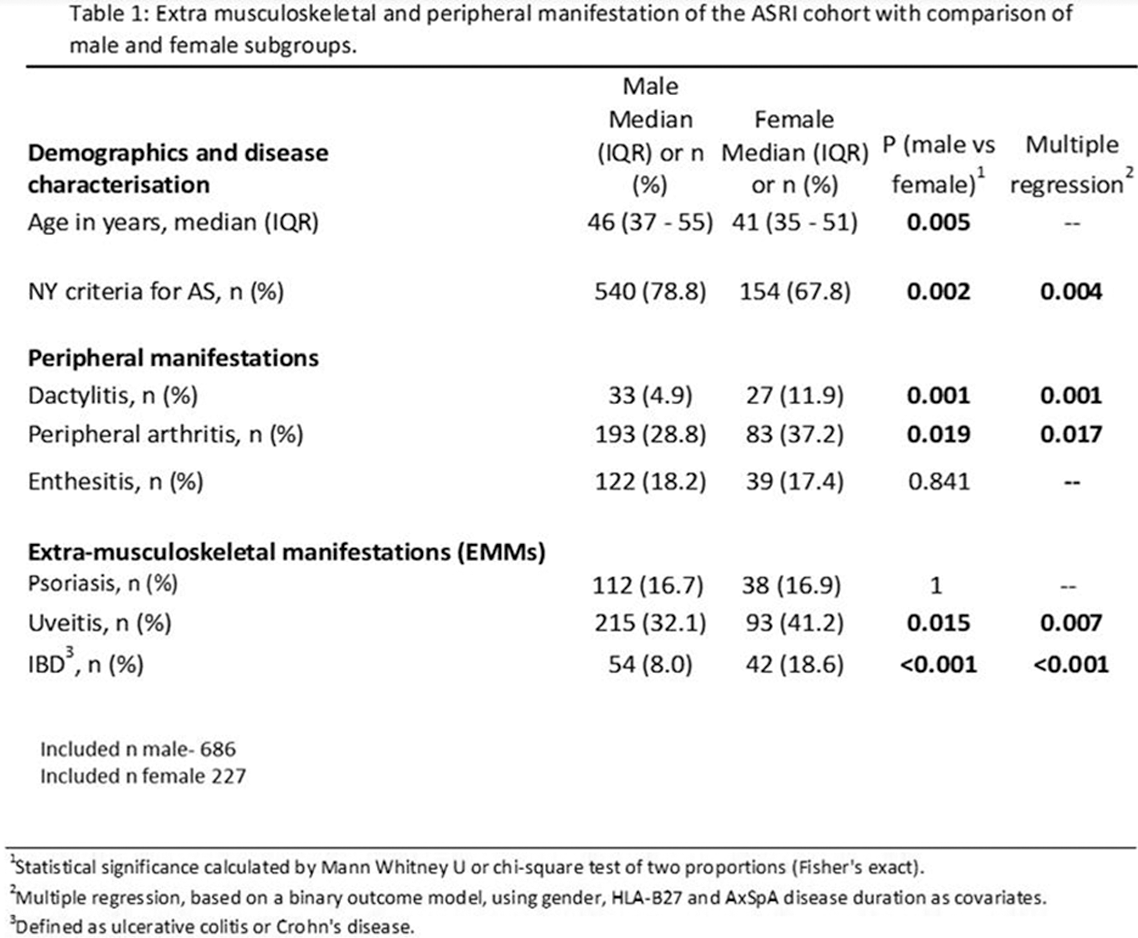
Results: Demographic details were available for 913 participants at the time of analysis including 686 male and 227 female patients. Males exhibited a higher median age compared to females (46 vs. 41 years) (p = 0.005). The fulfilment of the New York criteria for Ankylosing Spondylitis showed a notable gender discrepancy, with a higher prevalence in males (78.8%) compared to females (67.8%)(p = 0.002). Peripheral manifestations results showed females had a higher prevalence of dactylitis (11.9% vs. 4.9%) and peripheral arthritis (37.2% vs. 28.8%), both showing statistical significance (p = 0.001 and p = 0.019, respectively). Enthesitis did not show a significant gender difference (p = 0.84) Extra-musculoskeletal manifestations also demonstrated gender-related variations, with a higher prevalence of uveitis in females (41.2% vs. 32.1%, p = 0.015) and a significantly higher occurrence of inflammatory bowel disease in females compared to males (18.6% vs. 8.0%, p = < 0.001). Psoriasis did not exhibit a gender-related difference (p = 1).
Conclusion: Our study presents conflicting data from previous similar studies regarding sex disparities in extra musculoskeletal and peripheral manifestations in axSpA, in particular, enthesitis, uveitis and psoriasis. Our analysis showed females exhibited a higher prevalence of dactylitis and peripheral arthritis. Extra-musculoskeletal manifestations also displayed significant gender-related variations, with a higher prevalence of uveitis in females and a notably elevated occurrence of inflammatory bowel disease in the female subgroup. There was no statistical difference in the rates of psoriasis and enthesitis between male and female patients. These findings emphasize the importance of recognizing and considering gender-specific differences in the clinical spectrum of axSpA.
REFERENCES: NIL.
Acknowledgements: NIL.
Disclosure of Interests: None declared.