fetching data ... 
Background: Anti-neutrophil cytoplasmic antibody-associated vasculitis (AAV) including granulomatosis with polyangiitis (GPA), microscopic polyangiitis (MPA), and eosinophilic granulomatosis with polyangiitis (EGPA), could appear at any age, but according to a recent meta-analysis, mean age of AAV incidence is 56 years [1]. Clinical characteristics and outcomes of systemic autoimmune diseases vary among patients diagnosed across the lifespan. Therefore, studying the features of the clinical course of AAV in different age groups and the possible association between age and duration of the disease with the vasculitis damage index (VDI) can be considered a relevant issue.
Objectives: To compare the frequency of various clinical manifestations of ANCA-associated vasculitis among patients of two age groups - up to 40 years and older than 40 years, to investigate an association between age and duration of the disease and the VDI index.
Methods: This is a retrospective analysis of medical data of 95 patients with AAV (GPA (n = 40), MPA (n = 21), EGPA (n = 34)) diagnosed according to the ACR 1990 criteria or the CHCC 2013 classification criteria. The patients were divided into 2 groups depending on the age at the time of diagnosis: <40 years old and ≥40. We evaluated clinical subsets, vasculitis activity (using v. 3 of Birmingham vasculitis activity index, BVAS) and damage from vasculitis (using VDI) in each group. The statistical significance between qualitative values was assessed using the χ2 test and Fisher’s exact test, between quantitative values - using the Mann-Whitney test. Spearman correlation coefficient was used to determine the correlation between age and disease duration and VDI and BVAS
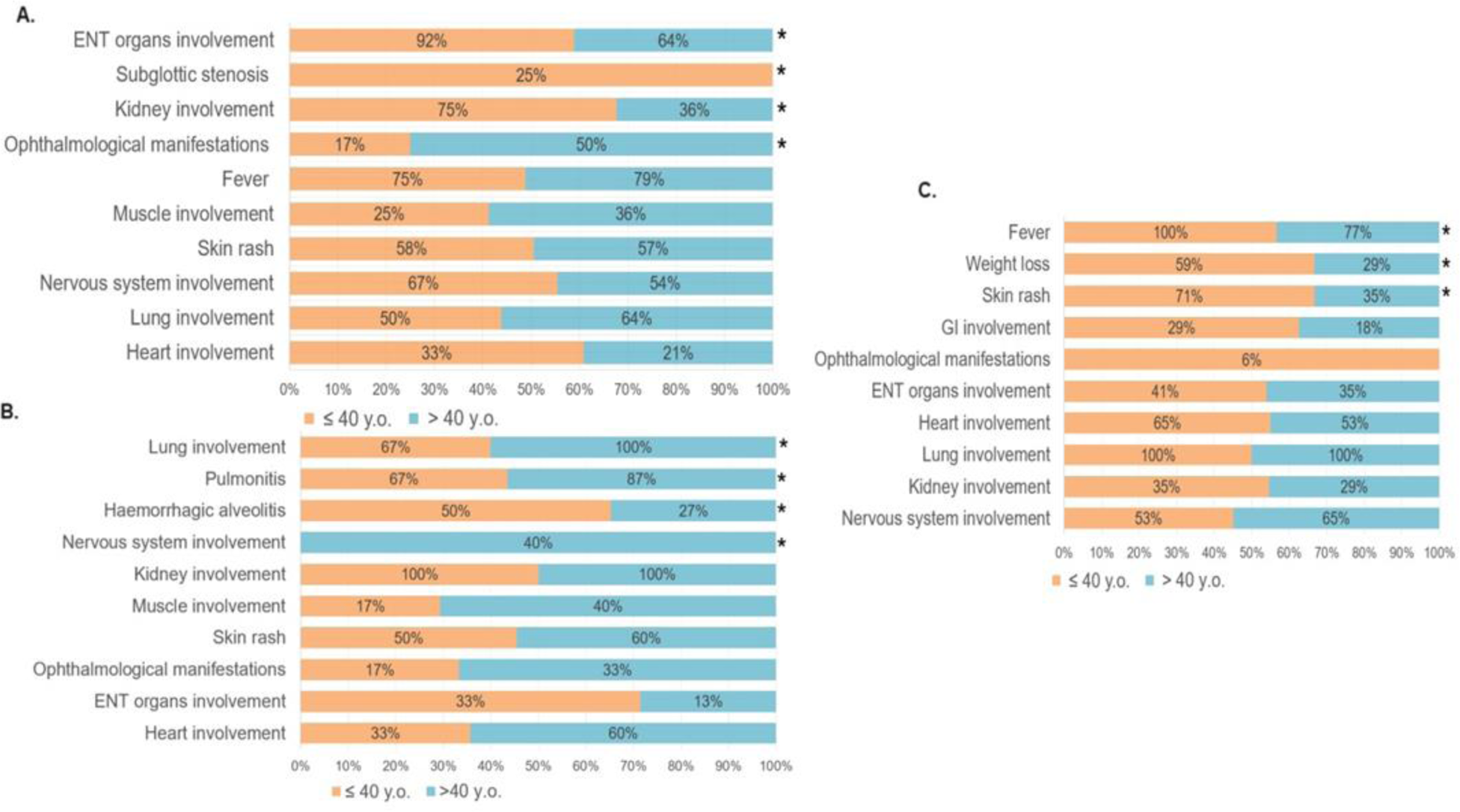
Results: GPA. Among young patients with GPA (<40 years old), there was a predominance of women (92% vs 57%), a higher frequency of kidney (75% vs 36%) and ENT organs (92% vs 64.3%) involvement compared with the older age group (Figure 1A). Subglottic stenosis occurred exclusively in young patients. There was a tendency for more frequent ophthalmological manifestations in the older age group (p=0.05). A positive moderate correlation was found between the duration of the disease and the VDI (r=0.43) and a negative moderate correlation between the age of the patients and the BVAS (r=-0.32).
MPA. We detected a more frequent lung involvement in the older age group (100% vs 67%), particularly pneumonitis (87% vs 67%), although the frequency of haemorrhagic alveolitis was twice as high among young patients (Figure 1B). Neurological manifestations were observed only in patients ≥40 years.
EGPA. Young adults with EGPA experienced more often fever (100% vs 76.5%), weight loss (59% vs 29%) and skin rash (71% vs 35%) (Figure 1C). No correlation was found between age and disease duration with the VDI and BVAS in patients with MPA and EGPA.
Conclusion: Age at the time of diagnosis is related to the clinical characteristics of AAV. There is no significant association between age and VDI score. However, VDI score increases with the duration of GPA and young GPA patients have a higher disease activity.
REFERENCES: [1] Redondo-Rodriguez R, Mena-Vázquez N, Cabezas-Lucena AM, et al. Systematic Review and Metaanalysis of Worldwide Incidence and Prevalence of Antineutrophil Cytoplasmic Antibody (ANCA) Associated Vasculitis. J Clin Med. 2022 May 4;11(9):2573. DOI: 10.3390/jcm11092573.
Clinical characteristics of patients with GPA (A), MPA (B) and EGPA (C) according to age groups.
*p<0.05
Acknowledgements: NIL.
Disclosure of Interests: None declared.