fetching data ... 
Background: Protein 14-3-3 belongs to the family of intracellular proteins. Protein 14-3-3 eta is a regulator of pyrin activity [1]. While 14-3-3 binding to pyrin inhibits inflammation, 14-3-3 binding decreases in the presence of mutant pyrin and inflammasome activation occurs [2].
In patients with rheumatoid arthritis, protein 14-3-3 levels have been found to be elevated in both synovial fluid and circulation and have been shown to have early prognostic significance [3]. Familial Mediterranean fever (FMF) is an autoinflammatory disease characterised by recurrent episodes of fever, abdominal pain, chest pain, arthralgia and rash [4].
Objectives: The aim of the study was to evaluate serum protein 14-3-3 eta levels in patients with and without FMF and to investigate the association of protein 14-3-3 eta with clinical disease activity, presence of damage and acute phase values and other laboratory correlates.
Methods: The study included 104 FMF patients and 50 healthy controls. Serum protein 14-3-3 eta levels from peripheral blood samples were analysed by ELISA method using ELK Biotechnology kit (China).
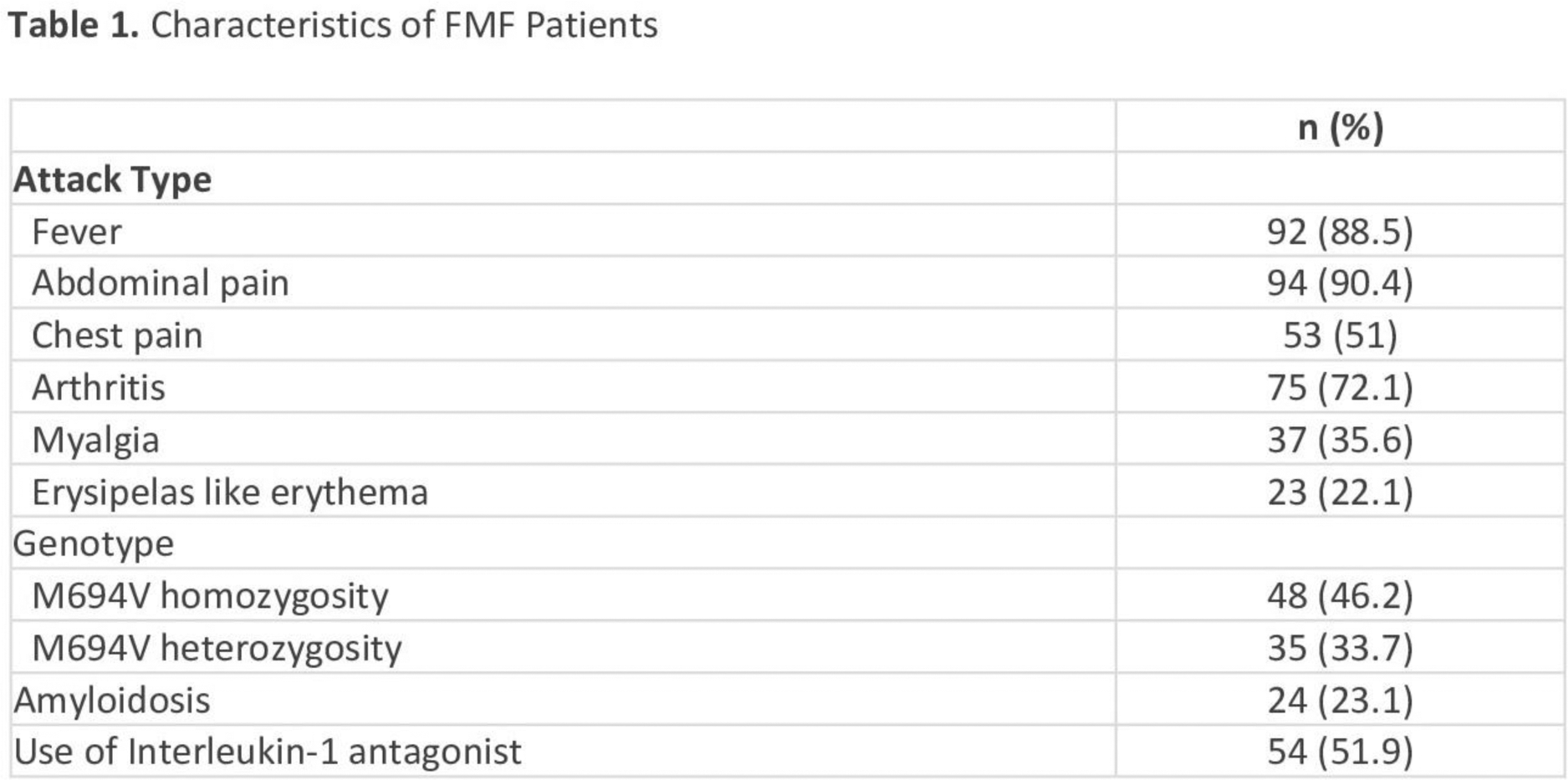
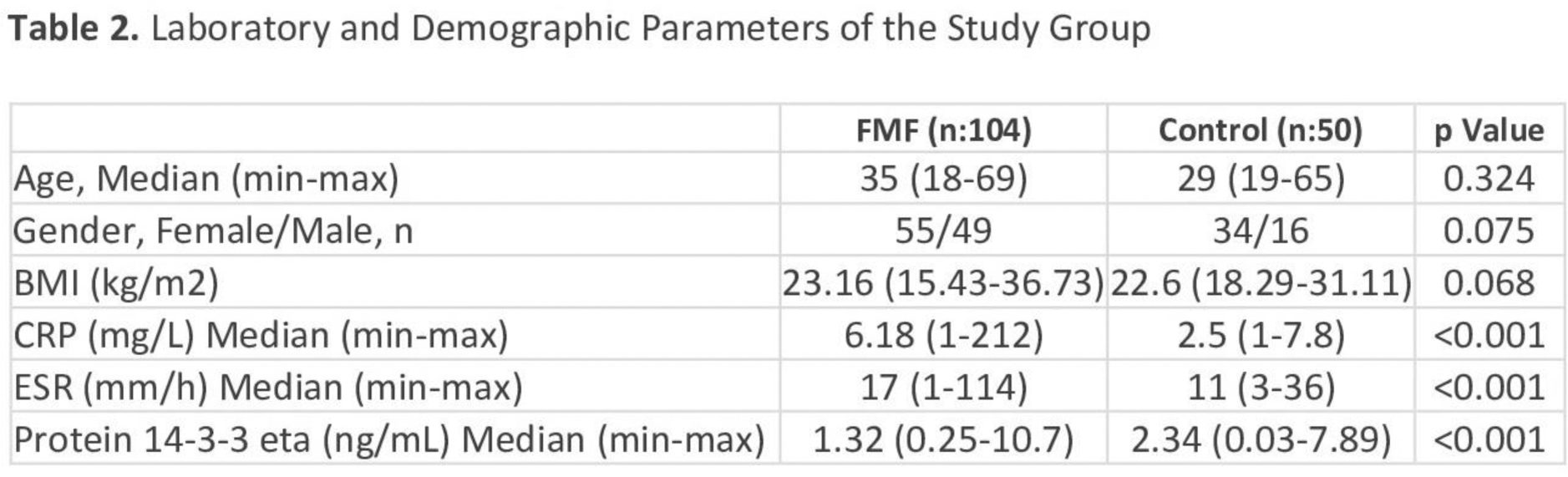
Results: The clinical characteristics of the FMF patients are shown in Table 1. Age, gender and body mass index (BMI) were similar between groups (p:0.324, p:0.075 and p:0.068) (Table 2). Protein 14-3-3 eta levels were significantly lower in FMF patients compared to controls (p<0.001). However, there was no correlation between the molecular level and the clinical features of the disease (p>0.05). There was no significant difference in protein 14-3-3 eta levels between attack and non-attack patients, with or without amyloidosis (p>0.05). This molecule is important in the pathogenesis of the disease. In addition, in line with the literature, C-reactive protein (CRP) and erythrocyte sedimentation rate were significantly higher in FMF patients compared to controls (p<0.001 and p<0.001, respectively).
Conclusion: As a result of our study, protein 14-3-3 eta appears to be effective in the pathogenesis of FMF disease. The molecule was not found to be clinically relevant. It may be a useful marker in the detection of the disease, but it is not thought to have any effect on prognosis.
REFERENCES: [1] Moghaddas F, Llamas R, De Nardo D, Martinez-Banaclocha H, Martinez-Garcia JJ, Mesa-del-Castillo P, et al. A novel Pyrin-Associated Autoinflammation with Neutrophilic Dermatosis mutation further defines 14-3-3 binding of pyrin and distinction to Familial Mediterranean Fever. Annals of the rheumatic diseases. 2017;76(12):2085-94.
[2] Park YH, Wood G, Kastner DL, Chae JJ. Pyrin inflammasome activation and RhoA signaling in the autoinflammatory diseases FMF and HIDS. Nature immunology. 2016;17(8):914-21.
[3] Abdelhafiz D, Kilborn S, Bukhari M. The role of 14-3-3 η as a biomarker in rheumatoid arthritis. Rheumatology and Immunology Research. 2021;2(2):87-90.
[4] Abdelhafiz D, Kilborn S, Bukhari M. The role of 14-3-3 η as a biomarker in rheumatoid arthritis. Rheumatology and Immunology Research. 2021;2(2):87-90.
Acknowledgements: Gazi University, Department of Rheumatology.
Disclosure of Interests: None declared.