fetching data ... 
Background: Rheumatic diseases are known as disorders that mainly affect the components of the musculoskeletal system: tendons, ligaments, bones, joints and muscles. The off-label use of medications may be justified in cases where a therapeutic option or alternative is required in some population groups. One of the medications with the greatest off-label use is Rituximab (RTX), which is described in the literature. In Latin America, the unauthorized uses of medications have little description in the literature, so this work aims to reveal the impact on the prescription trends of these medications in a rheumatology center according to local regulations (INVIMA-local regulatory board).
Objectives: The aim of this study is to describe the off-label use of RTX (most frequent off-label uses) in a rheumatology center.
Methods: A cross-sectional study from January 2020 to December 2022; Prescriptions of the medication with off-label use were included in the evaluated period. Patients were grouped by age group. The number of patients with RTX prescription was established. Comparisons were made between the most frequent diagnoses and the gender of the patients.
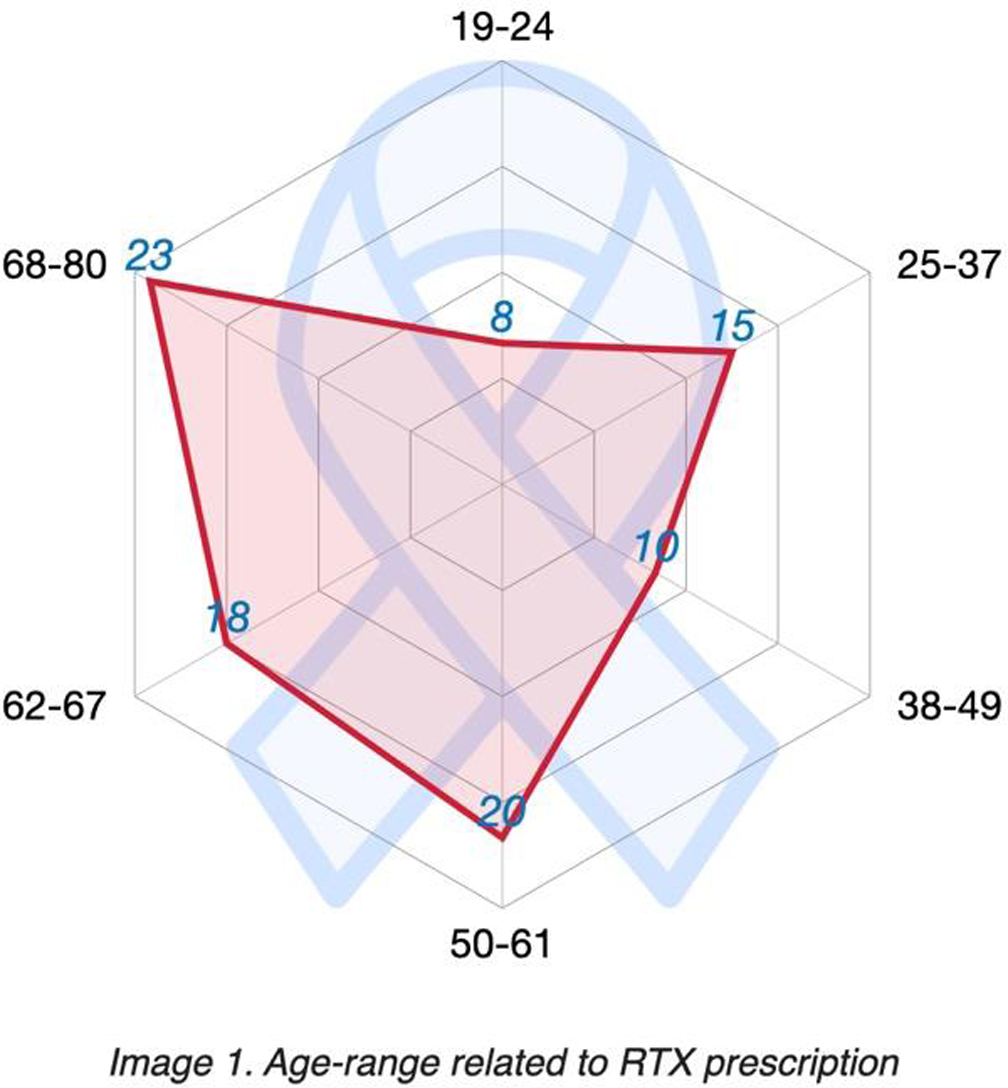
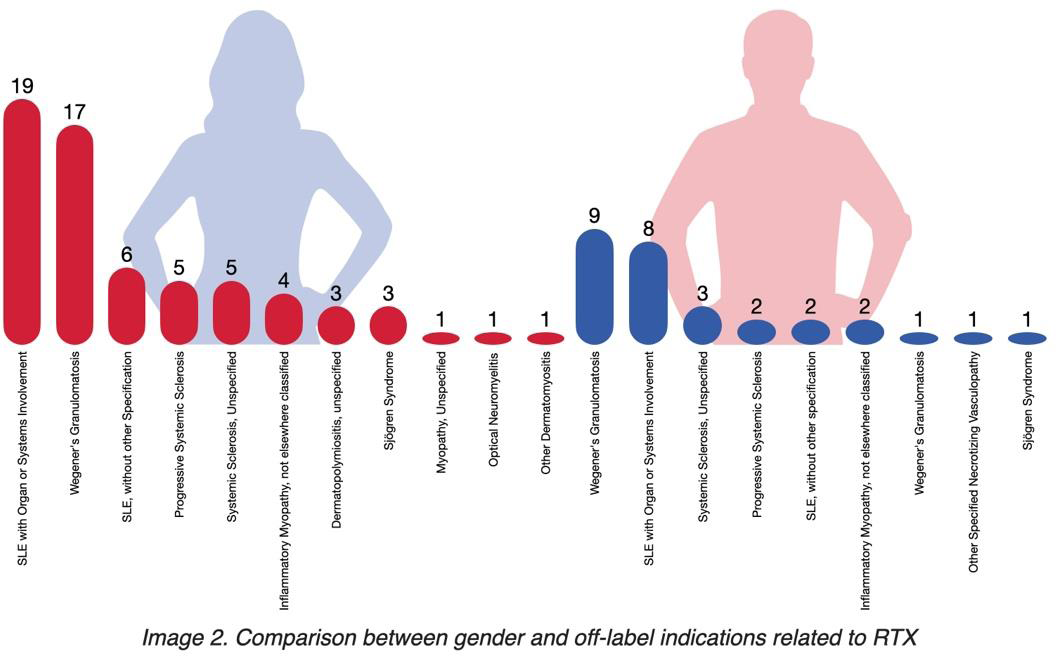
Results: In the period 2020 to 2022, 103 records of patients with RTX off-label prescriptions were found. 58 (64%) of patients are female. The majority age range was 50-61 years (Figure 1). 34 patients (33.0%) were Sistemic Lupus Erythematosus (SLE), 26 (25.2%) Wegener’s Granulomatosis, 14 (13.6%) with systemic scleroderma, 10 (9.7%) with vasculopathies, 7 (6.8%) with Sjogren syndrome, 6 (5.8%) with inflammatory myopathy, 4 (3.9%) with dermatopolymyositis (Figure 2).
Conclusion: A higher frequency was found in prescribing RTX in the SLE indication as off-label. The increased prescription of RTX is due to high disease activity in the reported cases. The highest percentage of patients prescribed off-label RTX was female. Additionally, the results demonstrate a safe use for RTX, supported by the treatment and control of the disease.
REFERENCES: NIL.
Acknowledgements: NIL.
Disclosure of Interests: Pedro Santos-Moreno Abbvie, Abbott, Biopas-UCB, Bristol, Janssen, Pfizer, Roche, Sanofi, Abbvie, Abbott, Biopas-UCB, Bristol, Janssen, Pfizer, Roche, Sanofi, Wilberto Rivero: None declared, Pedro Rodríguez-Linares: None declared, Gabriel-Santiago Rodríguez-Vargas: None declared, Fernando Rodriguez-Florido: None declared, Laura Villarreal: None declared, Nicolás Gutiérrez: None declared, Adriana Rojas-Villarraga: None declared, Ivania Ramirez: None declared, Eva Cardozo: None declared, María-Fernanda Linares-Contreras: None declared, Andrys Mayor-González: None declared, Maria Fernanda Cubides Acosta: None declared, Marta Juliana Mantilla: None declared.