fetching data ... 
Background: Vegan and vegetarian diets have been hypothesized to be beneficial and have anti-inflammatory effects in patients with Rheumatoid Arthritis (RA). Several systematic reviews and meta-analyses have investigated the impact of diet in people with RA, however, to date no review has focused on the vegan and vegetarian diets.
Objectives: The aim of this systematic review and meta-analysis was to evaluate the effect of vegan and vegetarian diets on disease activity, pain, fatigue, and physical functioning in patients with RA.
Methods: This review was conducted in accordance with the Cochrane Handbook for Systematic Reviews [1]. The protocol was registered in PROSPERO CRD42023495226 [2]. Randomized controlled trials (RCT) including adult patients with RA receiving a vegetarian (including lacto-ovo-vegetarian), vegan or whole-food plant-based dietary intervention were included independent of the outcomes measured. Searches on databases MEDLINE, EMBASE and CINAHL, citation chaser, and grey literature searches on Cochrane Central Register of Controlled Trials, ACR abstract books, and EULAR abstract books was performed in November/December of 2023. Screening, data extraction and quality assessment of eligible trials were performed separately by two reviewers in Covidence.org and with the Risk of Bias (ROB) 2 tool. Meta-analysis was conducted in RevMan by one reviewer and checked by two other reviewers. Chosen outcomes for the analysis was the core outcome set in RA trials that includes disease activity (Disease Activity Score 28 joints [DAS28]), pain (Visual Analog Scale [VAS]), and physical functioning (Health Assessment Questionnaire [HAQ]). Fatigue was only measured in one trial and therefore excluded from the meta-analysis.
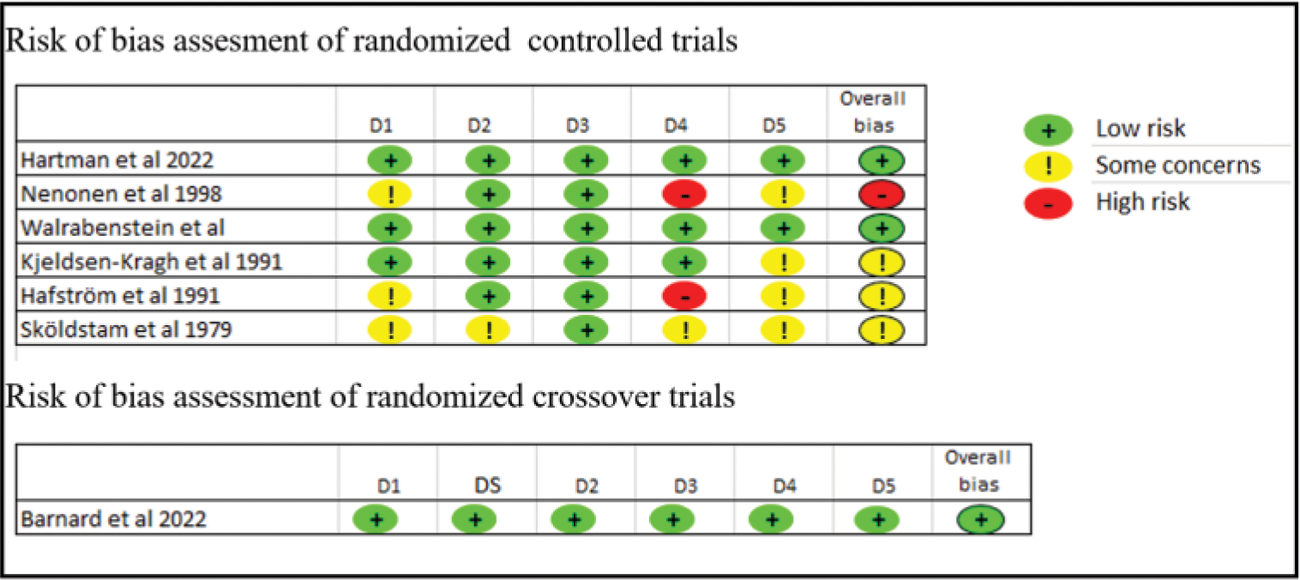
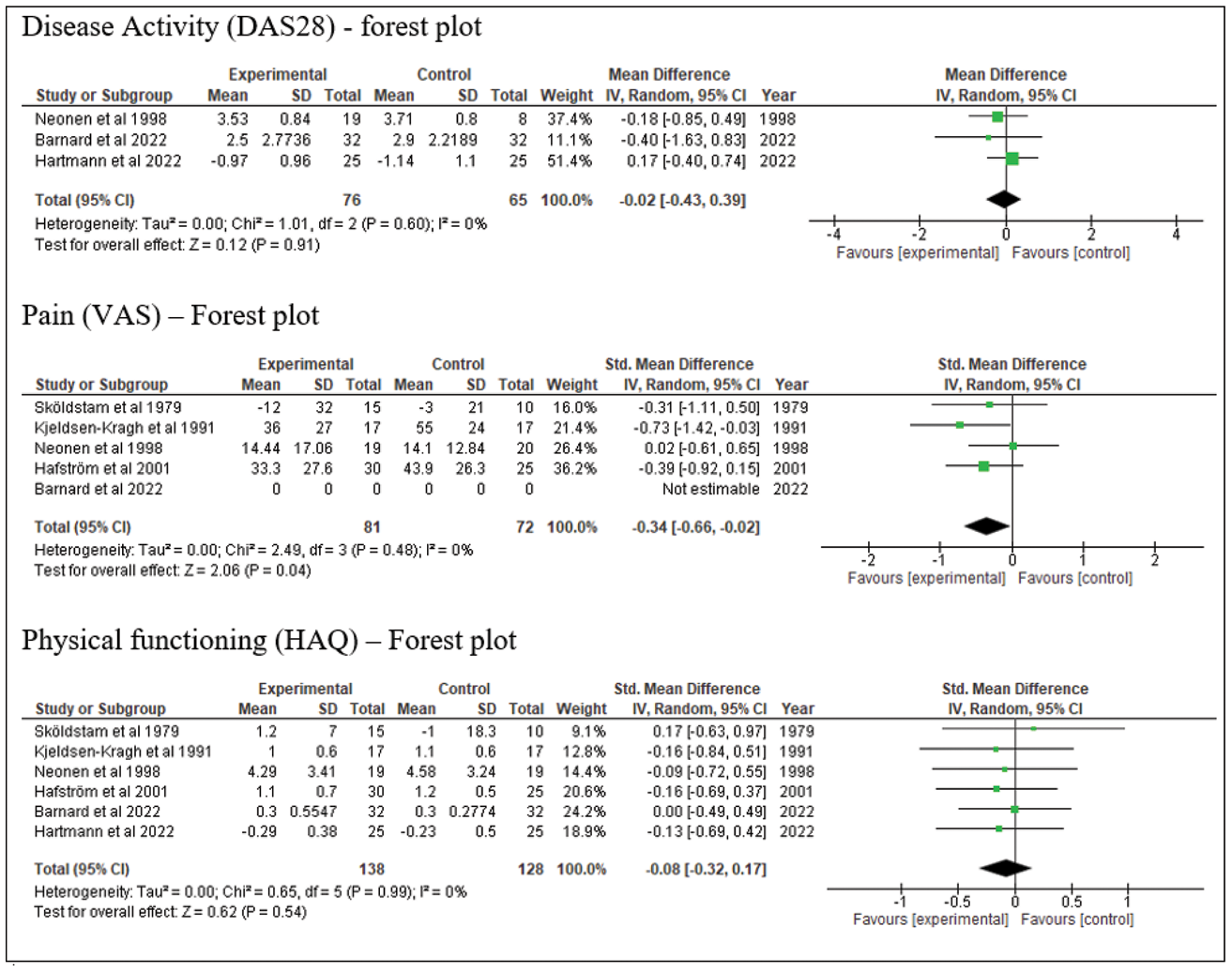
Results: 1,189 hits were screened, and seven trials published between 1979 to 2023 were included. The dietary interventions delivered across the trials were heterogenous, with some incorporating fasting and exercise. For the included studies, the ROB evaluation ranged from low to high risk (see Figure 1). Factors of concern and high risk were the lack of blinding (D1), measurement of the outcome (D4) and selection of the reported results (D5). The pooled analyses (see Figure 2) showed that participants following a vegan or vegetarian diet achieved no significant improvement in physical functioning compared to control diets (mean difference -0.08, 95% Confidence Interval (CI) -0.32, 0.17, n=266, p = 0.54, I 2 = 0%) and no significant improvement in disease activity compared to control diets (mean difference -0.02, 95% CI -0.43, 0.39, n=141, p = 0.91, I 2 = 0%). However, the pooled analyses showed that participants following a vegan or vegetarian diet achieved a small significant improvement in pain compared to control diets (mean difference -0.34, 95% CI -0.66, -0.02, n=153, p = 0.04, I 2 = 0%). The overall certainty of evidence (GRADE) for the effect of vegan and vegetarian diets on disease activity in patients with RA was graded as low.
Conclusion: The absence of high-quality RCT specifically evaluating the effect of vegan and vegetarian diets in patients with RA remains a notable gap. The results did show initial indications for positive effect of vegan and vegetarian diet on pain. However, further high-quality studies are needed to confirm the overall certainty of the evidence with higher GRADE.
REFERENCES: [1] Higgins et al. Available from
[2] PROSPERO CRD42023495225 Available from:
Risk of bias (ROB) assessment
Forest plots for the included outcomes
Acknowledgements: NIL.
Disclosure of Interests: None declared.