fetching data ... 
Background: Psoriatic arthritis (PsA) is a chronic inflammatory disease with a heterogenous clinical presentation. There is limited real-world data on guselkumab (GUS) treatment in patients with Psoriatic Arthritis (PsA). The FINGUS-PsA study is a retrospective, non-interventional registry study of the dosing, adherence, persistence, concomitant treatments, disease activity measurements and patient-reported outcomes in patients with PsA treated with GUS in Finland.
Objectives: The primary objectives of the FINGUS-PsA study were to estimate the real-world dosage, adherence and persistence of GUS. In addition, the exploratory objectives were to assess patient-reported outcomes regarding disease activity and quality of life (QoL).
Methods: National level registry data from 2008 to 2024 were collected from Finnish healthcare registries, Finnish Social Insurance Institution’s prescription registry and the Finnish Rheumatology Quality Register. Individuals were included in the study if they had a diagnosis of psoriatic arthritis (L40.5+) and a GUS purchase. Descriptive statistics, Medication Possession Ratios (MPR) and Proportion of Days Covered ratios (PDC) were calculated for the primary endpoints (MPR = [Sum of days’ supply in time frame] ÷ [number of days in time frame] × 100, PDC = [Sum of days covered in time frame] ÷ [number of days in time frame] × 100). For the exploratory endpoints, descriptive statistics and non-parametric paired statistical testing (Wilcoxon matched-pairs signed-rank test) were conducted at baseline (defined as 3 months before and 1 month after GUS treatment initiation) and 6 months after GUS treatment initiation.
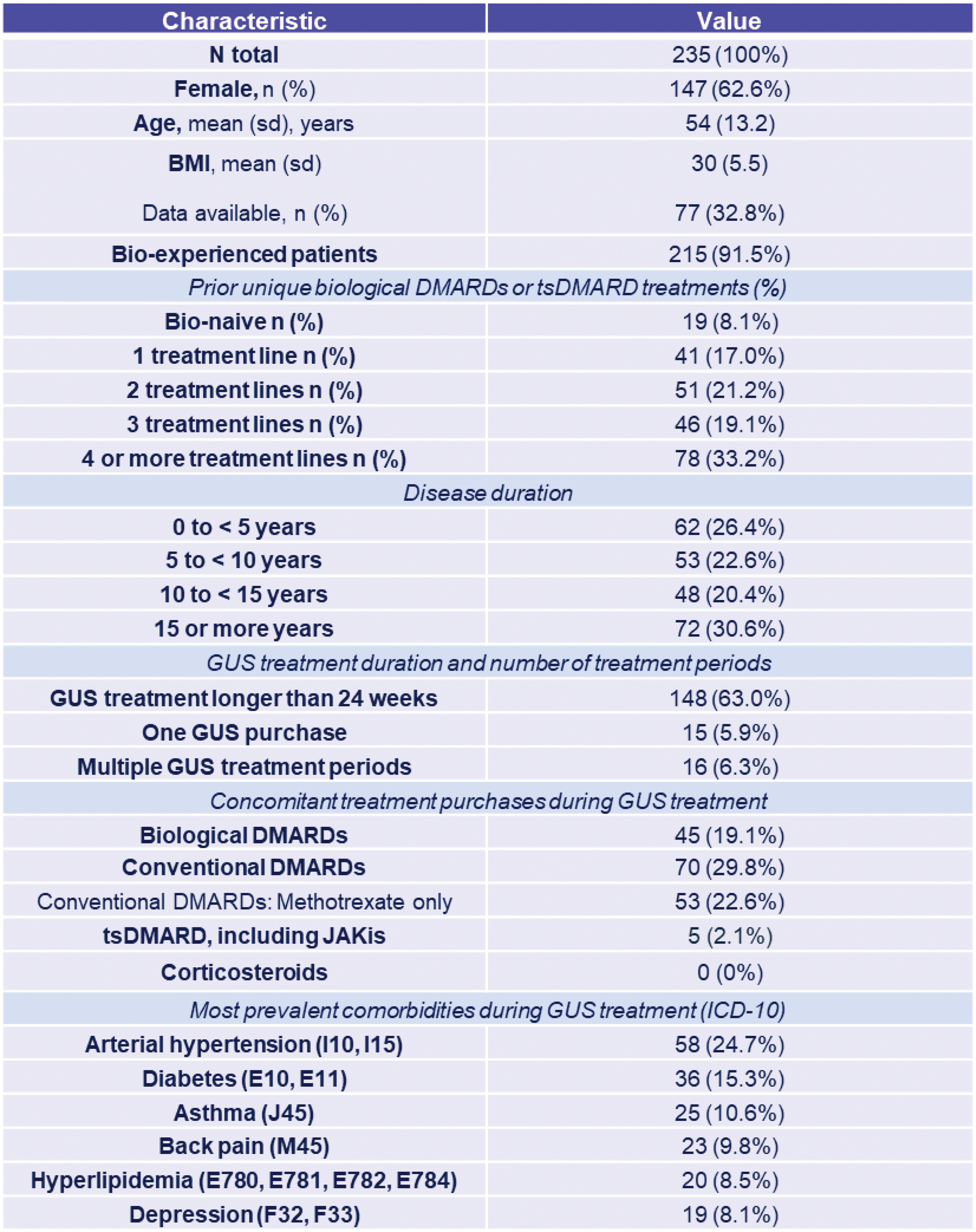
Results: 235 patients were included in the study, 62.6% of whom were female. The mean age was 54 years. Disease duration varied widely, with 26% of patients having a duration of 0-5 years, while 31% had been affected for over 15 years. Most of the patients, 91.5% were bio-experienced, while 8% were bio naïve. Of the patients, 17%, 21%, 19% and 33% patients had undergone 1, 2, 3 and 4 or more previous PsA treatment lines respectively (Table 1). Majority of the patients (58.7%) had undergone 1-3 PsA treatment lines with biologic disease-modifying antirheumatic drugs (bDMARDs) or JAK-inhibitors (JAKi) prior to GUS treatment. Most prevalent concomitant treatments were conventional DMARDS (29.8%). Prevalence of comorbidities did not differ from the general Finnish population [1]. Most patients adhered to Q8 week GUS dosing (76.3%, with a mean interval of 58.4 days between purchases). In contrast 17.9 % followed Q4 week dosing (mean of 34.5 days BP) and 5.8% adhered to other refilling schedules (mean 109.8 days BP). Most patients also filled their prescriptions in accordance with the Defined Daily Dose (DDD) with MPR and PDC ratio means of 104.4 (sd 131.4) and 75.9 days (sd 30.9) respectively. For the bio-experienced and bio-naïve groups the results were MPRs of 103.7 (sd 136.7) and 112.1 (sd 42.5) and PDCs of 74.4 days (sd 31.5) and 91.6 days (sd 16.5) respectively. The persistence to GUS treatment was calculated as time-to-discontinuation (TTD). Stratified by number of prior treatment lines with bDMARDs or JAKis, the respective TTDs medians were 299 days for patients with two, 421 days for patients with 3 and 224 for those with 4 or more prior treatments lines (Figure 1). For the bio naïve group and patients with one prior treatment line the median was not reached. The exploratory outcomes were analyzed for patients with a minimum treatment duration of 24 weeks (Figure 1). The disease activity scores either decreased or showed minimal, non-significant changes in the 6-month follow-up: mean DAS28 (n= 33) decreased 10% while mean TCJ28 (n= 34) significantly decreased 27%. SJC28 (n=34) increased by 7%. The trends in QoL trends reflected those seen in the disease activity scores. The HAQ score (n= 36) mean increased by 5% over the follow-up period. VAS for the patient’s general assessments (n=52) and the VAS for fatigue and exhaustion (n= 53) means decreased significantly by 15% and 12% over the follow-up period.
Conclusion: The nationwide FINGUS-PsA study highlights the real-world use of GUS for psoriatic arthritis in Finland. Most patients had long-standing disease and prior exposure to multiple bDMARDs or JAKis. High adherence to the GUS Q8 week dosing and alignment with the defined daily dose were observed. Patients with fewer prior treatments showed greater persistence with GUS, and significant improvements in quality of life and disease activity were noted over six months. These findings support optimizing treatment strategies for PsA patients and provide justification for treating patients with GUS earlier in their disease course.
REFERENCES: [1] General information - Chronic diseases - THL [Internet]. Finnish Institute for Health and Welfare (THL), Finland. 2023. Available from:
Results from time-to-discontinuation, quality of life and disease activity analyses
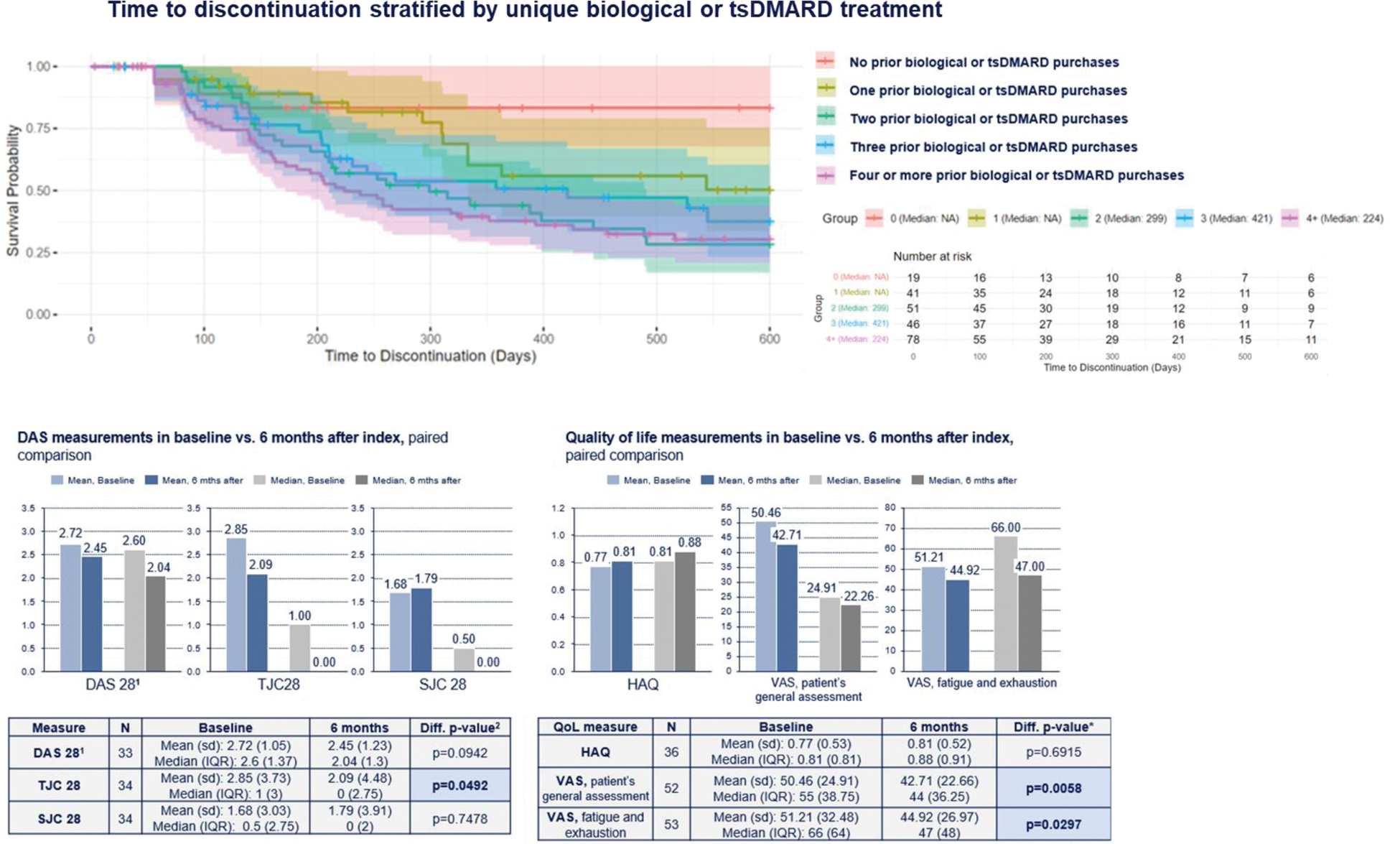
Table 1. Cohort characteristics at baseline, GUS treatment duration and concomitant treatment purchases and most prevalent comorbidities during GUS treatment
Acknowledgements: NIL.
Disclosure of Interests: Pinja Parmanne Speakers bureau from Abbvie, Johnson & Johnson, Orion Pharma, Consultancy fees from Johnson & Johnson, Minni Koivunen Shareholder of Johnson & Johnson stock and/or stock options, Employee of Johnson & Johnson, Kira Elfving Employee of Johnson & Johnson, Vivi Martina Mauno Has received funding from Johnson & Johnson for consultation, Mohamed Sharaf Owns Johnson & Johnson shares and stock, Employee of Johnson & Johnson, Laura Kuusalo Speakers bureau from: Abbvie, Boehringer Ingelheim, Galapagos, Lilly, Medac, Pfizer, UCB, Consultancy fees from Pfizer, UCB, Galapagos, Johnson & Johnson.
© The Authors 2025. This abstract is an open access article published in Annals of Rheumatic Diseases under the CC BY-NC-ND license (