fetching data ... 
Background: Systemic lupus erythematosus (SLE) is a chronic autoimmune disease affecting multiple organs. Standardized recommendations for the management of SLE in the six Gulf countries are limited.
Objectives: The aim of this initiative was to develop evidence-based overarching principles and recommendations for the management of adult SLE patients in the Gulf region.
Methods: A task force comprising 10 expert rheumatologists from Bahrain, Kuwait, Oman, Qatar, Saudi Arabia, and the United Arab Emirates developed PICO questions related to the management of SLE in the regional context. A systematic literature review (PROSPERO CRD42024538813) using PubMed/Medline, Cochrane, and Google Scholar identified published evidence for the PICO questions. Evidence-based overarching principles and recommendations were developed by a core non-voting team of experts from the task force and were graded as per EULAR Standardized Operating Procedures. Consensus required a level of agreement of at least 70% of the voting team for each recommendation via anonymous online voting. Rheumatologists with specialized training in lupus, experience running lupus clinics, and/or publications in SLE, along with lupus patients from across the Gulf region, provided external validation through similar voting.
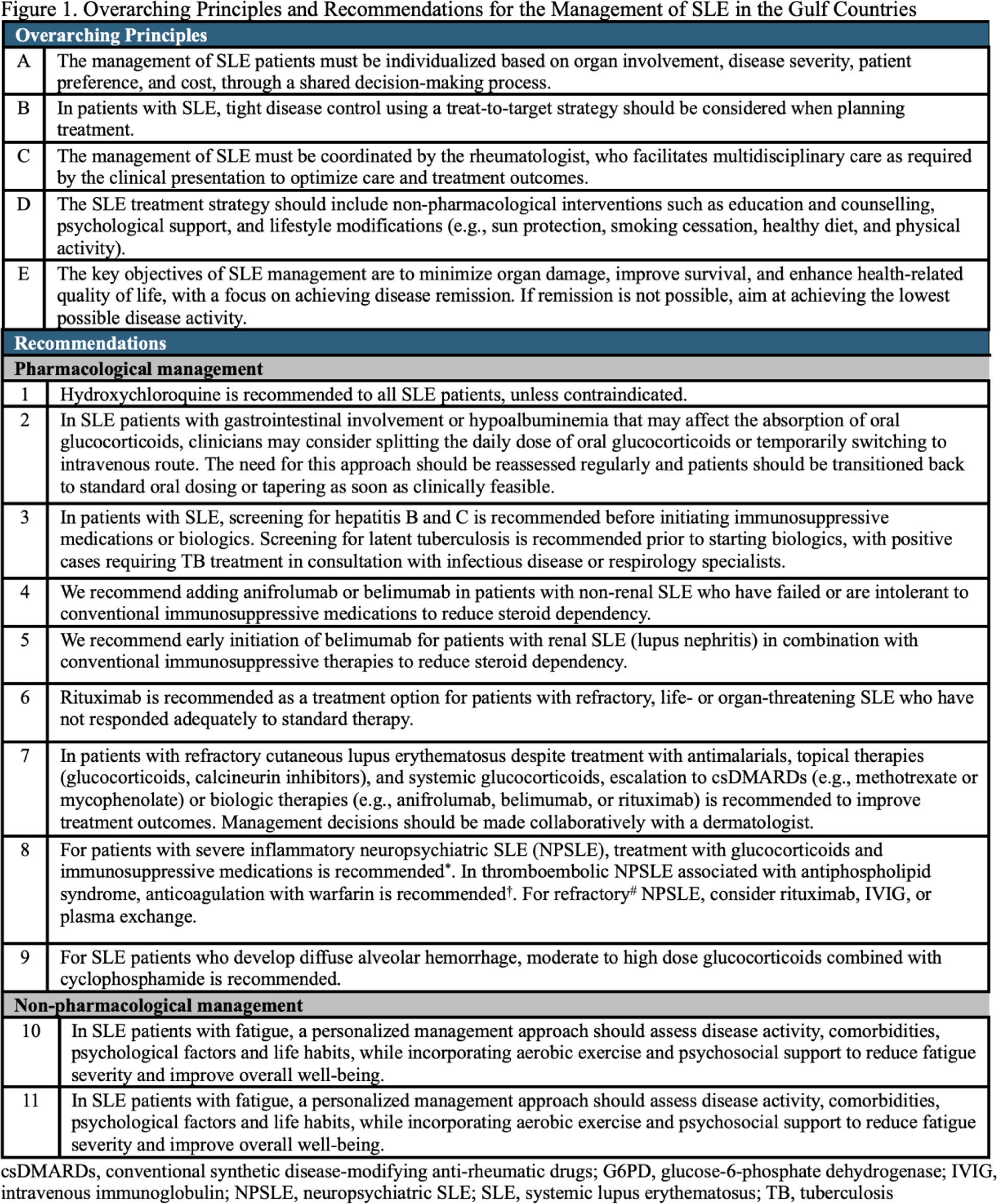
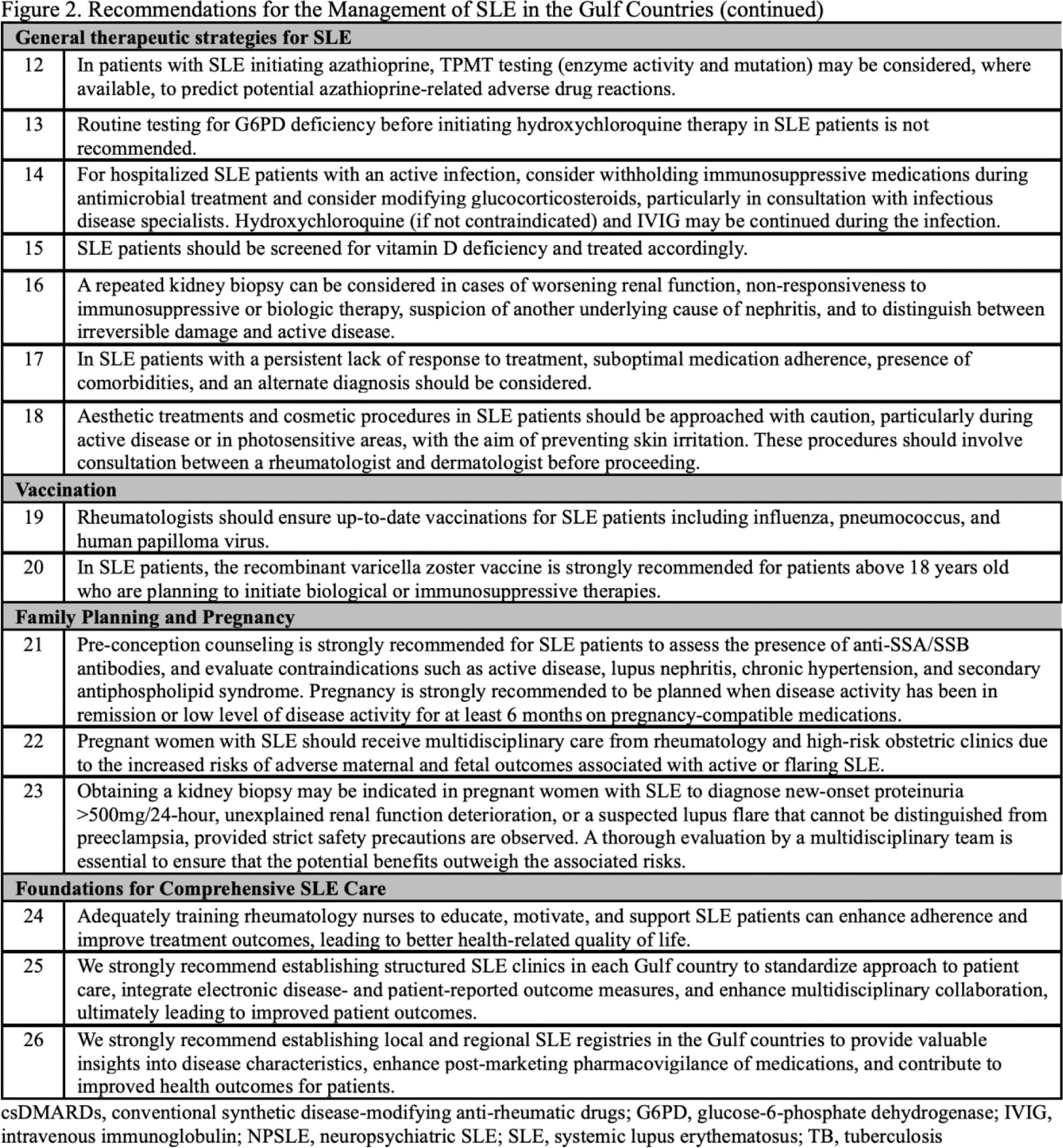
Results: Five overarching principles and 26 recommendations were developed (Figures 1 and 2) in alignment with previously published international and regional guidelines, with specific adaptations to the Gulf regional context. Consensus was reached among the voting task force members, and minor modifications were made following external validation.
The overarching principles emphasize the importance of individualized, multidisciplinary care using shared decision-making and a treat-to-target strategy. They also highlight the integration of both non-pharmacological and pharmacological management approaches. The recommendations address various pharmacological strategies for SLE management, and provide guidance on special clinical scenarios, including refractory cutaneous lupus, fatigue, neuropsychiatric SLE, and alveolar hemorrhage. General therapeutic strategies include TPMT testing before initiating azathioprine, the unnecessity of G6PD testing before starting hydroxychloroquine, indications for repeat renal biopsy, and the need for caution with aesthetic treatments and cosmetic procedures. Vaccination against specific viral infections is recommended for SLE patients. Furthermore, recommendations cover pregnancy planning, collaboration with high-risk obstetric clinics, and criteria for performing renal biopsy during pregnancy. Finally, the establishment of comprehensive SLE care was recommended through nurse training, the creation of structured lupus clinics, and the development of regional registries to enhance care delivery and patient outcomes.
Conclusion: We present the first comprehensive set of overarching principles and recommendations specific to the Gulf region on the management of SLE. These were based on an elaborate systematic literature review, integrating clinical evidence and regional expertise.
REFERENCES: [1] van der Heijde et al. 2014 Update of the EULAR standardised operating procedures for EULAR-endorsed recommendations. Ann Rheum Dis. 2015 Jan;74(1):8-13. doi: 10.1136/annrheumdis-2014-206350. PMID: 25261577.
[2] Fanouriakis et al. EULAR recommendations for the management of systemic lupus erythematosus: 2023 update. Ann Rheum Dis. 2024 Jan 2;83(1):15-29. PMID: 37827694.
[3] Mok et al. The Asia-Pacific League of Associations for Rheumatology consensus statements on the management of systemic lupus erythematosus. Lancet Rheumatol. 2021 Jul;3(7):e517-e531. PMID: 38279404.
Acknowledgements: Medical writing support was provided by Eric Mario and Luqman Khan, Connect Communication, Dubai, United Arab Emirates.
Disclosure of Interests: None declared.
© The Authors 2025. This abstract is an open access article published in Annals of Rheumatic Diseases under the CC BY-NC-ND license (