fetching data ... 
Background: Systemic lupus erythematosus (SLE) is a complex, multi-organ autoimmune disease that requires comprehensive multi-disciplinary management, yet standardized guidelines for referral, diagnosis, monitoring, and follow-up in the six Gulf countries (Bahrain, Kuwait, Oman, Qatar, Saudi Arabia, and the United Arab Emirates) remain limited.
Objectives: The aim of this initiative was to develop evidence-based overarching principles and recommendations for the referral, diagnosis, monitoring and follow-up of adult SLE patients in the Gulf region.
Methods: A task force of 10 expert rheumatologists from the Gulf countries formulated PICO-based clinical questions tailored to the regional management of SLE. A systematic literature review (PROSPERO CRD42024538813) was conducted using PubMed/Medline, Cochrane Library, and Google Scholar to gather evidence addressing these questions. Evidence-based overarching principles and recommendations were drafted by a non-voting core team following EULAR Standardized Operating Procedures. Consensus was achieved when at least 70% of the voting members agreed on each recommendation through anonymous online voting. External validation was provided by patients and rheumatologists with fellowship training in SLE, experience running lupus clinics, and/or multiple publications on SLE, who participated in a similar voting process.
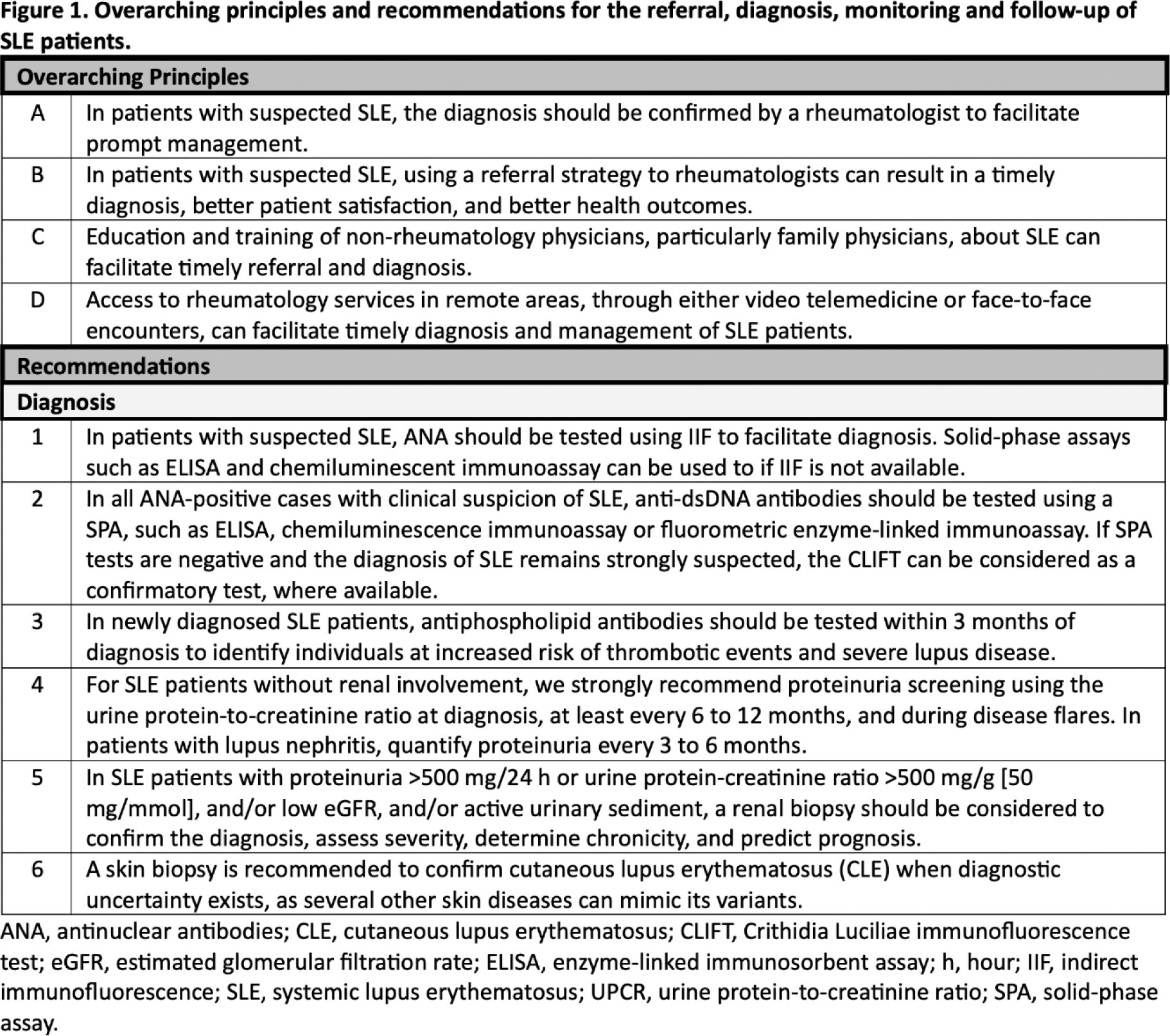
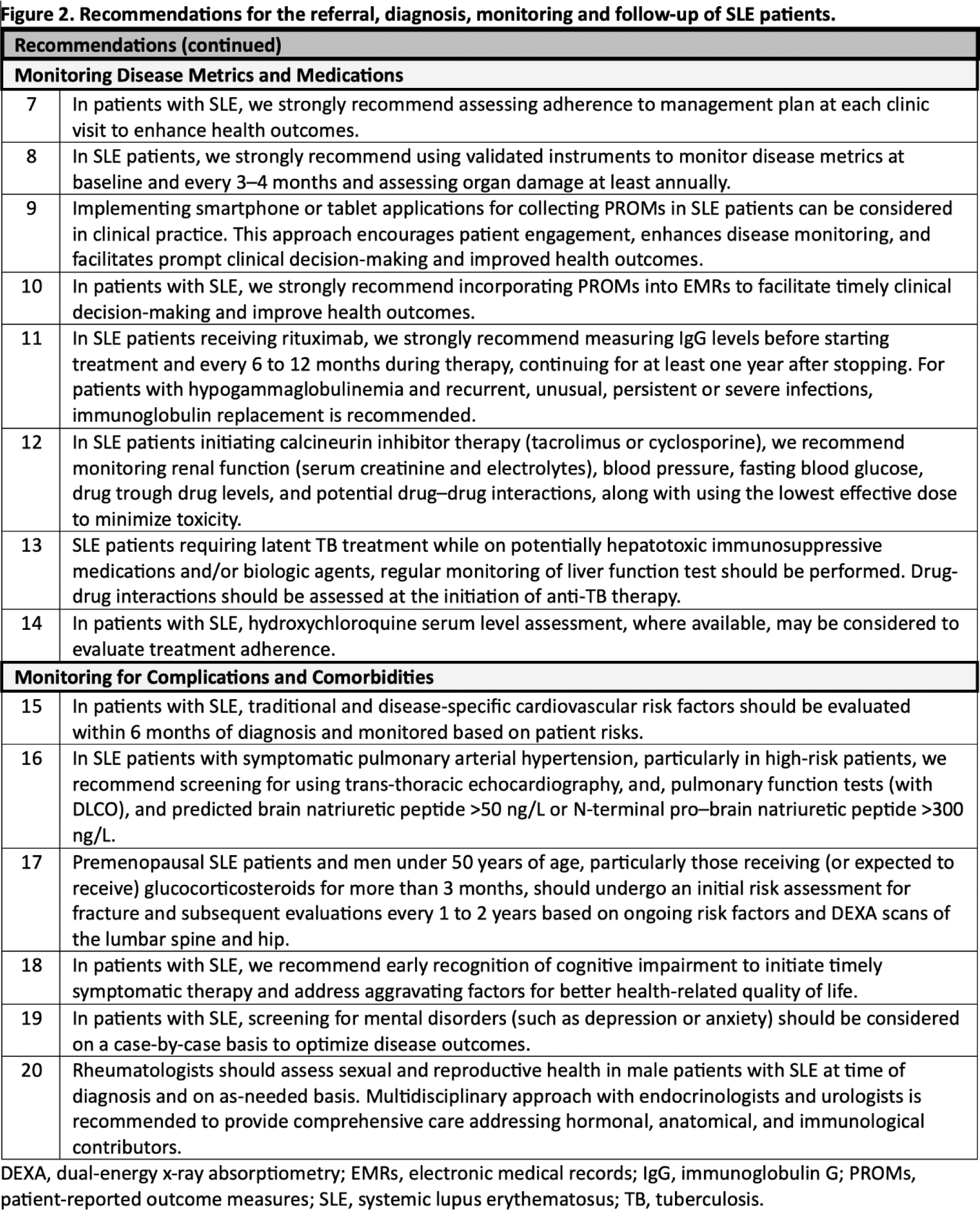
Results: Based on the evidence and expert opinion, four overarching principles and 20 recommendations were developed (Figures 1 and 2). Consensus was reached among the voting task force members, and minor modifications were made following external validation. While being congruent with previously published guidelines, they contain specific adaptations to the context of the demographics and healthcare infrastructure within the Gulf region. The overarching principles emphasize using a referral strategy to rheumatologists for confirmation of SLE diagnosis. Providing education and training for non-rheumatologists and improving access to rheumatology care in remote areas is of paramount importance. While the recommendations discuss specific diagnostic tests for antinuclear and antiphospholipid antibodies, dsDNA, and urine protein-to-creatinine ratio, they also advocate the use of kidney and skin biopsies under specific conditions. Recommendations also focus on when to screen and quantify for proteinuria. They also underscore the need to monitor disease activity, medication adherence, adverse events of certain medications, while encouraging the use of digital applications and electronic patient-reported outcome measures. Additionally, it is also important to monitor patients with SLE for complications and comorbidities.
Conclusion: These comprehensive evidence-based overarching principles and recommendations have been specifically tailored to the nuances of the Gulf region, based on an elaborate systematic literature review and extensive regional expertise, with the aim to standardize and enhance SLE referral, diagnosis, monitoring, and follow-up across the region.
REFERENCES: [1] van der Heijde et al. 2014 Update of the EULAR standardised operating procedures for EULAR-endorsed recommendations. Ann Rheum Dis. 2015 Jan;74(1):8-13. doi: 10.1136/annrheumdis-2014-206350. PMID: 25261577.
Acknowledgements: We would like to thank Dr. Gehad Elghazali (Consultant Clinical Immunologist, PureLab, Abu Dhabi, UAE), and Dr. Mohamed Hasan (Consultant Nephrologist, SEHA Kidney Care, Abu Dhabi, UAE) for their valuble input. Medical writing support was provided by Eric Mario and Luqman Khan, Connect Communication, Dubai, UAE.
Disclosure of Interests: None declared.
© The Authors 2025. This abstract is an open access article published in Annals of Rheumatic Diseases under the CC BY-NC-ND license (