fetching data ... 
Background: Systemic lupus erythematosus (SLE) is a multisystemic autoimmune disease that presents numerous diagnostic and treatment challenges. In France, the median delay to diagnosis is two years, and the lack of a well-defined care pathway results in detrimental delays in diagnosis and a negative experience for patients [1].
Objectives: To systematically assess the challenges and barriers faced by patients diagnosed with SLE in Alsace and to develop a comprehensive patient pathway to address these issues.
Methods: A multidisciplinary working group, including hospital and private practitioners (rheumatologists, internists, dermatologists, biologists, general practitioners and occupational physicians), pharmacists, nurses, patients, and representatives from patient associations, participated in the project. Each stage of the patient pathway was analysed to identify challenges and potential opportunities for improvement. The group discussed and implemented solutions in real-world settings to enhance the patient pathway and overall care. Finally, an evaluation of the pathway will be conducted to assess its impact.
Results: The working group identified three key areas for improvement:
Diagnostic Delays and Challenges : To enhance awareness of SLE among non-specialists, ongoing medical education meetings were organized and a symptom/complaint sheet were distributed to help raise suspicion of the disease. An immunological test prescription aid sheet was also provided to facilitate early patient identification by grouping relevant symptoms and investigations. Immunological results have been standardized across Alsace, including guidance for prescribers to ensure appropriate referrals. Additionally, an online tele-expertise platform has been established to assist independent clinicians in making accurate diagnoses and improving early referrals. Finally, once a diagnosis is made, a verbatim proposal has been developed in collaboration with doctors, a psychologist and patients to improve the experience of communicating the diagnosis.
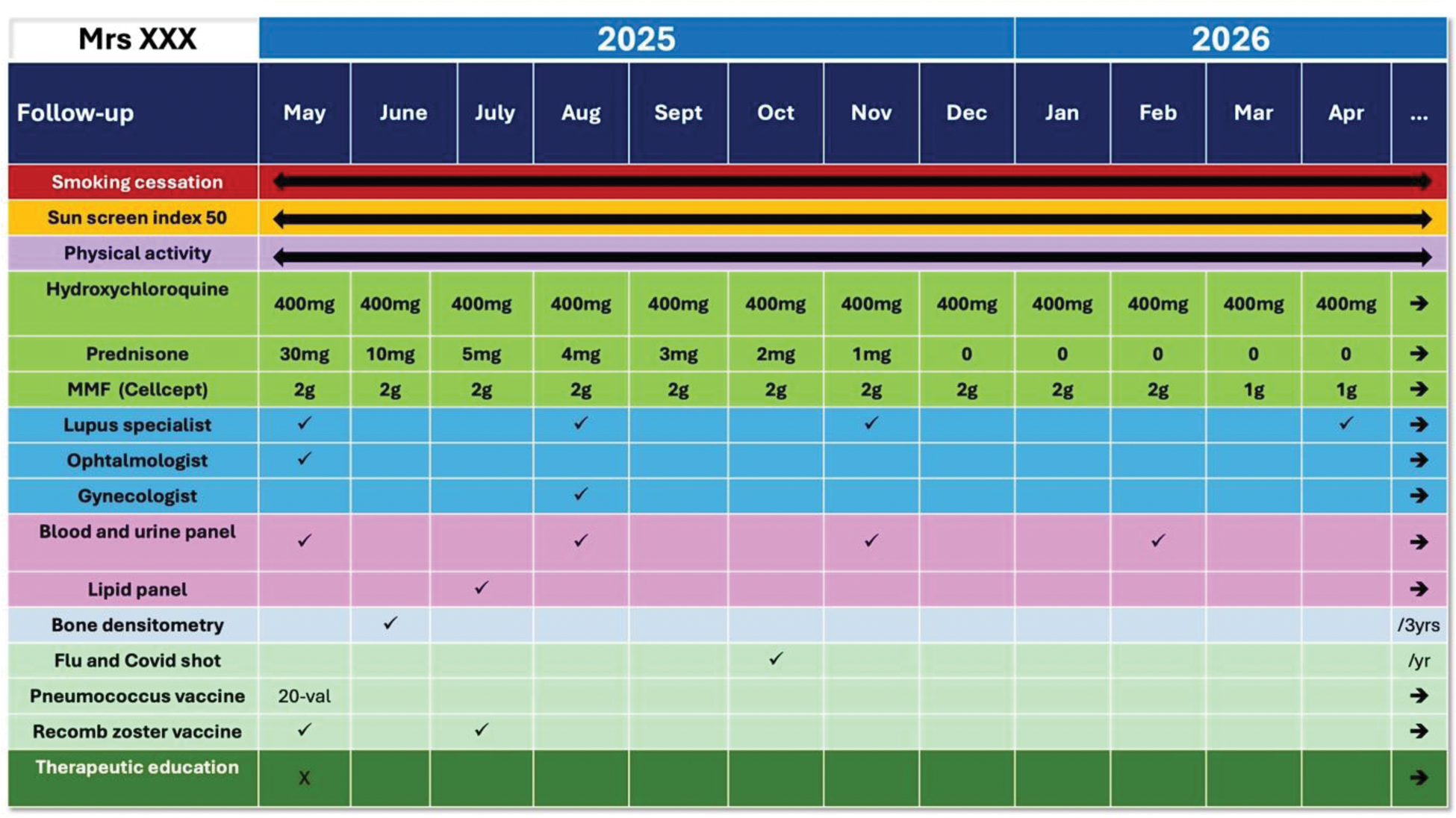
Therapeutic Management : A document outlining a personalized care plan was created to give patients a comprehensive overview of their treatment (Figure 1). Furthermore, multidisciplinary consultation meetings, either in person or remotely, have been reinforced to address complex cases (e.g., refractory SLE, SLE pregnancy).
Holistic Care : A modular day hospital has been established to provide a wide array of consultations tailored to patient needs. These include medical and pharmacist consultations, physiotherapy, dietary advice, physical activity, occupational therapy. A consult with occupational medicine specialist is available to assist patients to continue their professional activity. Co-morbidities such as osteoporosis and cardiovascular issues, along with vaccinations, are also addressed with a specialized nurse. Additionally, the SLE program developed by the therapeutic education team further enhances the range of services available.
Conclusion: This integrative patient pathway is designed to enhance and streamline the early diagnosis and holistic care of SLE patients in Alsace. Such a pathway could potentially be expanded to other regions and conditions to improve overall patient care.
REFERENCES: [1] Schlenker A. et al., Lupus Sci Med. 2022 May;9(1):e000700.`
Patient therapeutic plan overview.
Acknowledgements: All the participants of “Parcours Lupus Alsace” including patients and patient representatives.
Disclosure of Interests: Marc Scherlinger This program was financially supported by GSK., Yannick Dieudonné: None declared , Raymond Attuil: None declared , Christelle Sordet: None declared , Benoit Nespola: None declared , Olivier Hinschberger: None declared , Jacques-Eric Gottenberg: None declared , Dervieux Benjamin: None declared , Laurent Arnaud: None declared , Marc Ardizzone: None declared , Maria Gonzalez: None declared , Julia Walther: None declared , Thierry Martin: None declared , Jean Sibilia: None declared .
© The Authors 2025. This abstract is an open access article published in Annals of Rheumatic Diseases under the CC BY-NC-ND license (