fetching data ... 
Background: Osteoarthritis (OA) is the most common joint disease among the elderly. Current conservative treatment options for OA include exercise, topical/oral analgesics, and intra-articular injections. However, these treatments are not sufficient for most patients.
Objectives: Recent studies have demonstrated the efficacy of transarterial periarticular embolization (TAPE) as a treatment for chronic musculoskeletal pain [1]. The objective of this study was to present the preliminary results of the efficacy and safety of TAPE with intraarterial imipenem-cilastatin in patients with painful hand osteoarthritis.
Methods: Patient selection: Patients who are clinically and radiographically compatible with hand osteoarthritis with painful and inflamed distal interphalangeal (DIP) and/or proximal interphalangeal (PIP) and/or first carpometacarpal (CMC) joints, refractory to medical treatment (nonsteroid anti-inflammatory drugs (NSAIDs), colchicine and low-dose glucocorticoids) and Visual Analog Scale (VAS) pain scores are four or higher were included in the study. Study design: This was a single-centre retrospective study. The results presented herein encompass the pre-procedure, first-week, and first-month outcomes of patients who were followed from June 2024 to December 2024. Procedure: Depending on the symptomatic finger, the radial artery (1-2 fingers) or ulnar artery (3-5 fingers) was catheterized with a 24G needle, and angiographic images were obtained. If the symptomatic finger was not predominantly supplied by the catheterized artery, the other artery was also catheterized. If the angiograms showed increased contrast enhancement compatible with hypervascularity in the symptomatic finger, embolization with a mixture of imipenem-cilastatin and iodinated contrast was performed until the hypervascular areas disappeared (Figure 1). Evaluation: Patients were assessed using the Quick Disabilities of the Arm, Shoulder, and Hand Questionnaire (consisting of 11 questions assessing the patient’s ability to perform daily tasks and pain symptoms, the patient scoring each question from 0 to 5) and the physician/patient VAS score (0-10 cm) before and after the procedure.
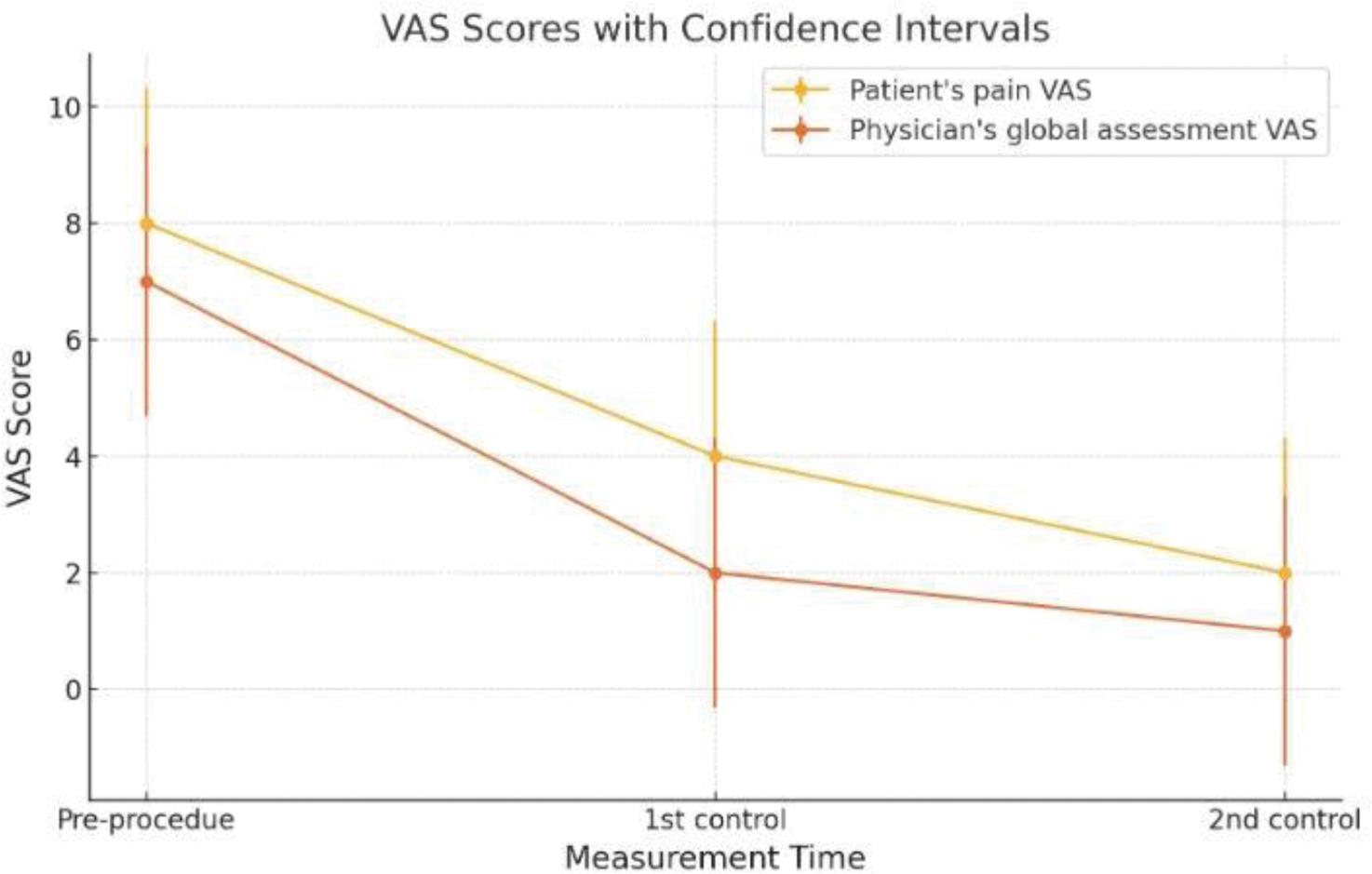
Results: A total of nine patients (100% female, mean [SD] age 66.7 [6.7] years) underwent TAPE on a total of 13 extremities. Three patients (33.3%) had erosive osteoarthritis, and four patients (44,4%) had accompanying calcium pyrophosphate deposition disease. All patients (100%) had previously used NSAIDs, seven patients (77.8%) had low-dose glucocorticoids, five patients (55.6%) had colchicine, four patients (44.4%) had hydroxychloroquine and two patients (22.2%) had a history of biologic disease-modifying anti-rheumatic drug (DMARD) use due to misdiagnosis. According to symptomatic finger vascularisation, imipenem-cilastatin+iodinated contrast embolisation was performed from the radial artery in seven patients (77.8%), the ulnar artery in five patients (55.6%), and both radial and ulnar arteries in three patients (33.3%). The mean dose of imipenem-cilastatin administered per procedure was 160 mg. Following the procedure, only one patient experienced a complication, manifesting urticaria, which was successfully resolved with antihistamines. Post-procedure skin discoloration was not classified as a complication. There were significant decreases in patient pain VAS and physician global assessment VAS scores following TAPE procedures (Table 1). Specifically, the median patient VAS dropped from 8.0 (min:6, max:10) pre-TAPE to 4.0 (min:1, max:7) at the first post-TAPE control and 2.0 (min:0, max:5) at the second control. Additionally, the mean QDASH score (SD) was 75.1 (14.9) pre-procedure, decreasing to 30.0 (23.9) at the first control and 16.1 (15.9) at the second control.
Conclusion: In clinical practice, treatment options for patients with painful hand OA are very limited. A study by Kubo T et al. from Japan demonstrated the efficacy and safety of intra-arterial imipenem-cilastatin+iodinated contrast embolisation in 92 patients with hand OA in 2023 [1]. Our initial findings indicate that TAPE is an effective and reliable treatment option for patients who are challenging to manage in daily practice. Further investigation is needed to determine which patients are suitable for TAPE, how often the procedure should be repeated, and what are the long-term outcomes.
REFERENCES: [1] Kubo T, Miyazaki K, Shibuya M, Sugihara E, Nakata M, Okuno Y. Intra-Arterial Injection of Temporary Embolic Material Through a Needle Inserted into the Radial or Ulnar Artery for Distal and Proximal Interphalangeal Joint Osteoarthritis: A Retrospective Study of 92 Patients. Cardiovasc Intervent Radiol. 2023 Oct;46(10):1375-1382. doi: 10.1007/s00270-023-03514-x. Epub 2023 Jul 31. PMID: 37524895.
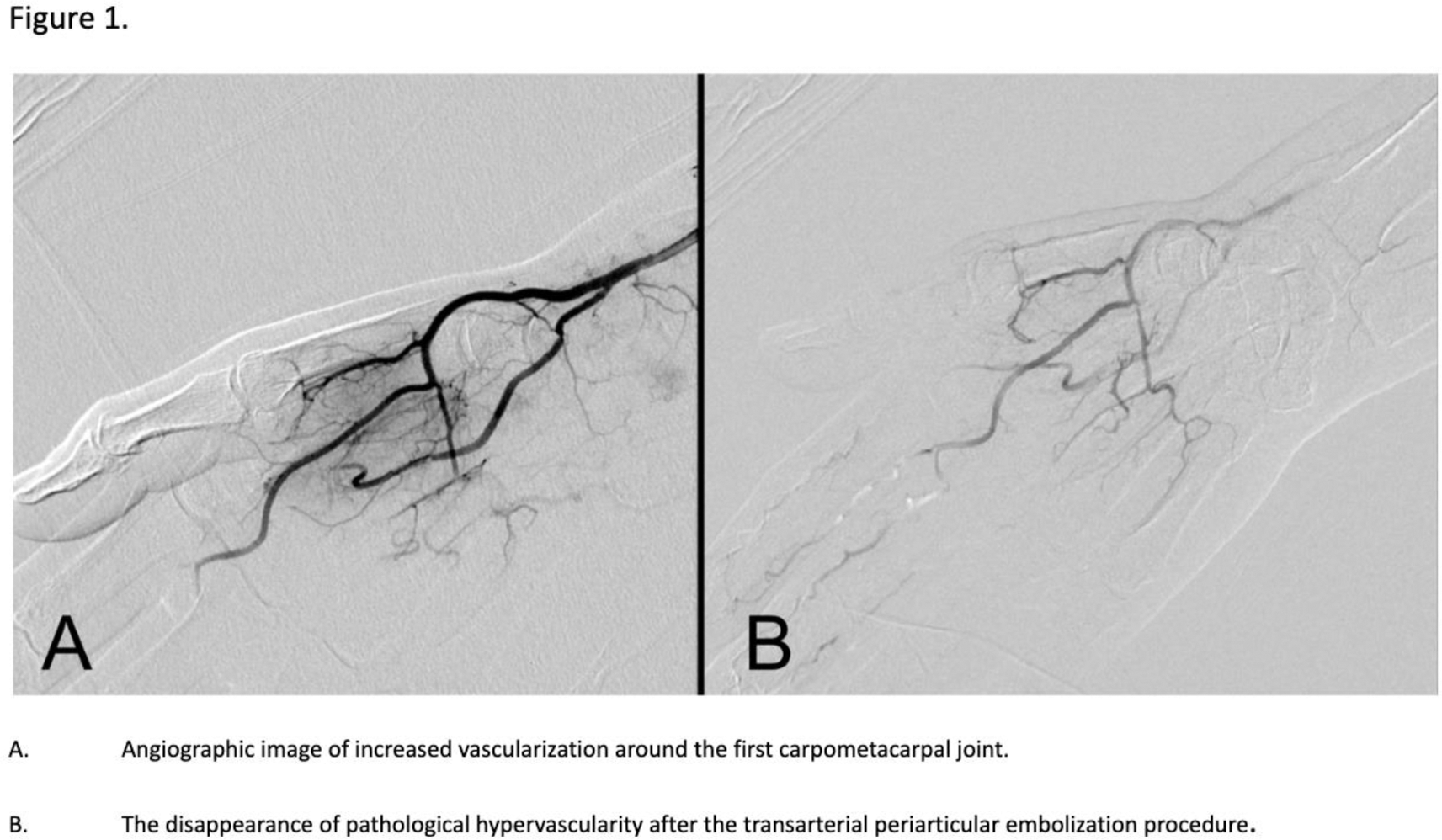
Table 1. Changes in the patient’s pain VAS and physicians’ global assessment VAS scores.
Acknowledgements: NIL.
Disclosure of Interests: None declared.
© The Authors 2025. This abstract is an open access article published in Annals of Rheumatic Diseases under the CC BY-NC-ND license (