fetching data ... 
Background: Chronic systemic inflammation is recognized as a potential risk factor for cancer, and concerns persist regarding the long-term malignancy risk associated with immunomodulatory treatments. Although targeted therapies are widely used in spondyloarthritis (SpA), real-world data on the impact of cumulative exposure duration on cancer risk remain limited.
Objectives: To assess the association between the duration of exposure to targeted therapies and the risk of cancer in patients with SpA, including psoriatic arthritis (PsA), axial SpA, and other SpA subtypes.
Methods: We conducted a nationwide cohort study using the French National Health Insurance Database (SNDS), including all adults with SpA who initiated a targeted therapy (TNFi, IL17i, IL12/23i, IL23i, JAKi) between January 2014 and September 2022. Patients with a history of cancer, HIV infection, or organ transplantation were excluded. Follow-up started after a 3-month lag period to limit reverse causality and continued until December 31, 2024. Exposure to targeted therapies was assessed annually as a time-varying variable and categorized as ≤6 or >6 months per year. The primary outcome was incident cancer, identified using a validated algorithm. Weighted Cox marginal structural models with inverse probability of treatment and censoring weights were used to account for time-varying confounding (sociodemographic factors, comorbidities, concomitant treatments), with additional adjustment for the number of therapy classes and calendar period. Prespecified subgroup analyses were conducted by cancer type (solid versus hematological malignancies), by SpA subtype (PsA versus other SpA subtypes), and among patients treated exclusively with TNFi (with censoring at treatment class switch). Several sensitivity analyses using alternative statistical modeling strategies were performed. Results are presented as weighted hazard ratios (wHRs) with 95% confidence intervals (CIs).
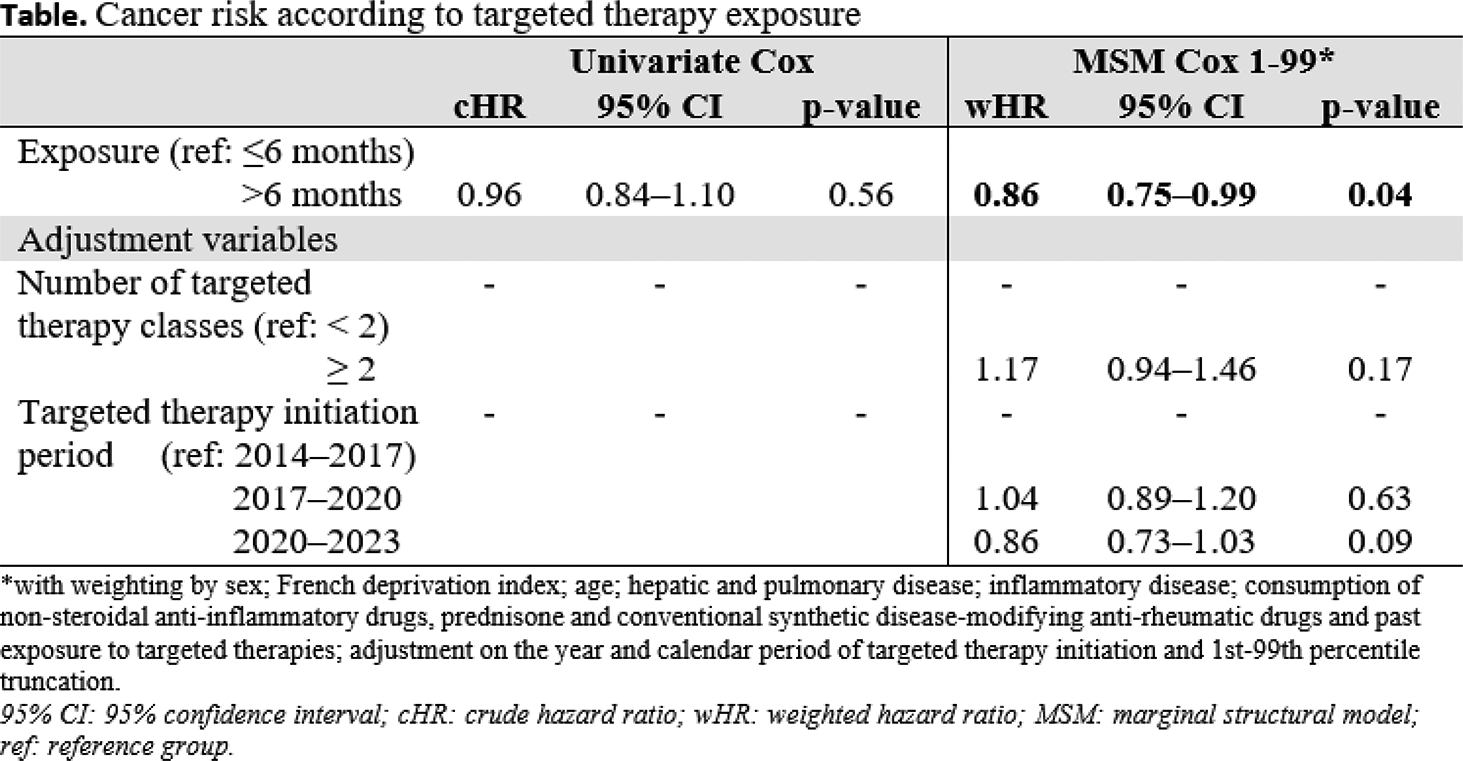
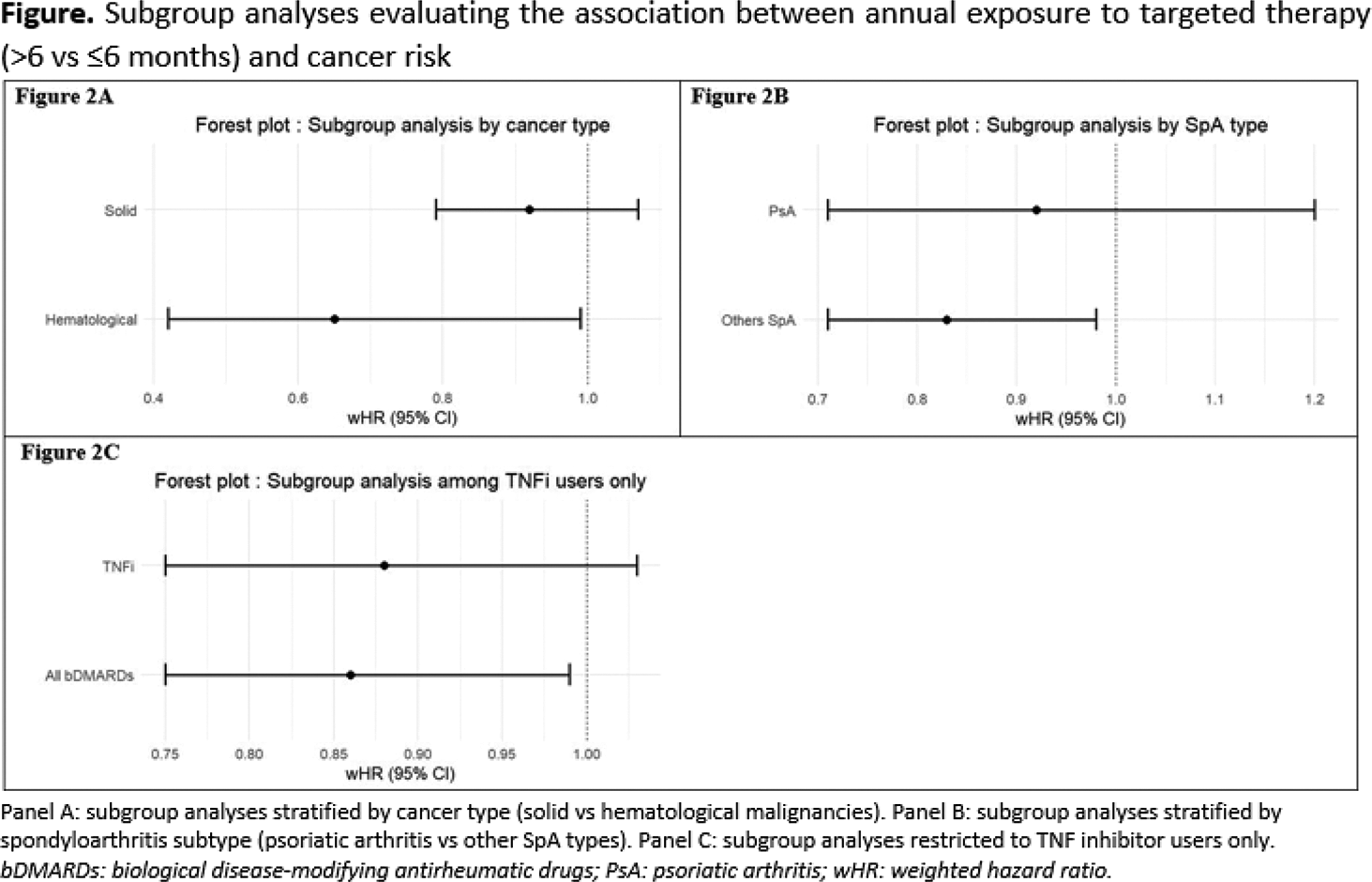
Results: A total of 56,591 patients were included (53.9% women; mean age 44 ± 13 years; median follow-up 5.0 years). During follow-up, 1,224 cancers occurred, including 1,029 solid cancers, 116 hematological malignancies, and 79 unclassified cancers. The overall cancer incidence rate was 479 per 100,000 person-years (95%CI 452-505). Exposure to targeted therapies for more than 6 months per year was associated with a reduced overall cancer risk compared with exposure of 6 months or less (wHR 0.86; 95%CI 0.75-0.99; Table 1 ). In subgroup analyses, this association remained statistically significant for hematological malignancies (wHR 0.65; 95%CI 0.42-0.99) but not for solid cancers (wHR 0.92; 95%CI 0.79-1.07). Results of the other subgroup analyses are presented in the Figure 1. Results were consistent across sensitivity analyses.
Conclusions: In this large nationwide cohort, prolonged exposure to targeted therapies in patients with SpA was associated with a reduced overall risk of cancer, although this potential protective effect was significant only for hematological malignancies. This finding may reflect improved disease control and reduced systemic inflammation. These results provide reassuring evidence regarding the long-term cancer safety of targeted therapies in SpA; however, residual confounding cannot be excluded, and further studies are warranted.
REFERENCES: NIL.
Acknowledgments: NIL.
Disclosure of Interests: Karine Tankovic: None declared, PASCAL CLAUDEPIERRE Consulting fees from AbbVie, Amgen, Biogen, Celltrion, Galapagos, Janssen, Lilly, MSD, Novartis, Pfizer and UCB (<10000$ each)., Tat Thang Vo: None declared, Tran Trong Khoi Le: None declared, Siham Iggui: None declared, Laetitia Penso: None declared, Emilie Sbidian: None declared, Laura Pina Vegas Honoraria for lectures from UCB, Lilly, Novartis, Pfizer., Consulting fees from Celltrion, Abbvie, UCB, Novartis.